


Vintage rattan furniture is everywhere again — and not by accident. Estate sales, flea markets, IKEA, Urban Outfitters, West Elm: all of them carry rattan or wicker pieces that trace their design directly back to the 1960s and 70s. The difference is that the originals are better, cheaper once you know where to look, and increasingly sought after by collectors who understand what they are holding.
This guide covers the history of rattan and wicker furniture, why it has come back so strongly, how to identify a genuine vintage piece, and where to find one.
Rattan and Wicker: The Origins
Wicker — as a weaving technique rather than a material — has been documented as far back as ancient Egypt. Its popularity spread from Egypt and Persia to ancient Rome, and then received a significant boost in the 15th century when sea traders returning from Southeast Asia brought back a species of palm far stronger than traditional European wicker materials: rattan.
It was the Victorian Era, however, that established rattan and wicker as genuinely mainstream. Their versatility, durability, and relative economy made them ideal for the expanding middle classes. As Hamna Amjad, blogger at alrug.com, puts it: not only were rattan and wicker easily available and economical, but being lightweight and sturdy, they could be used to design stylish, sophisticated, and low-maintenance furniture pieces that could resist harsh weather.
How to Tell Rattan from Bamboo and Wicker
The three terms are regularly confused, but the differences matter when you are buying.
Rattan is a solid-stemmed climbing palm native to Southeast Asia. Unlike bamboo, which has a hollow stem and prominent nodes, rattan forms a solid cylinder of consistent diameter — which makes it exceptionally strong and flexible for furniture making. Some varieties are harder than mahogany.
Wicker is a construction technique, not a material. It describes the weaving method used to create furniture, and rattan, cane, bamboo, and rush can all be wicker-woven. In other words, rattan furniture is a type of wicker furniture — but wicker furniture is not necessarily rattan.
Cane is the outer skin of the rattan vine, stripped and used for binding elements together and in surface finishing details.
The Rise, Fall, and Revival of Rattan Furniture
After the Victorian boom, rattan fell out of fashion during the early 20th century as tastes moved toward harder, more industrial materials. It came back strongly in the late 1960s and 70s, when it became closely associated with the bohemian lifestyle. Notable designers including Rohé Noordwolde, Arne Jacobsen, Charlotte Perriand, Franco Albini, and Heywood-Wakefield produced pieces that now define the look.
“Back in the 70s rattan was inescapable,” says Nicola Croughan, Lead Interior Designer at Roman Blinds Direct. “No porch was complete without a rattan chair or hanging basket. It dominated the interior design landscape for the decade but fell out of favour as the 80s moved away from the natural look towards more high-tech options. A lot of these wonderful, extremely durable pieces of rattan furniture were then left out in the cold — often literally.” They stuck around, however, staying relatively quiet and waiting to be rediscovered.
That rediscovery is now well underway. Thrifty shoppers, ecologically aware designers, and a sustained 70s revival have all worked in rattan’s favour. The major difference in this incarnation of rattan furniture is that it is now being used as focal points inside of the home, like mirrors, lights, wardrobes, and accent tables,” explains Kevin Godfrey of Henry Laurent Estate Sales, “whereas it was originally intended for outdoor or porch use due to its durable nature.
Sustainability is also a factor. “People care about the production, the history, and the story of their furniture more than they ever have,” explains Nicola Croughan. “That’s partially why upcycling and thrift purchases have seen a great deal of success — and these two things have been a major driver of rattan’s comeback.”
Will the Rattan Revival Last?
This is not the first time rattan has been declared the material of the moment. It has survived the Victorian parlour, the 1970s porch, and multiple subsequent dismissals. Habitat, DOMO, and IKEA are all producing new rattan pieces with Seventies-inspired silhouettes — which tells you something about the current appetite. The Gatti and Drucker chairs, in particular, have become shorthand for relaxed Parisian bistro style, and continue to influence designers working in contemporary spaces.
According to Heidi Ferguson, Owner of Stitches and Rust Vintage, “like any other trend this one will ride the wave and then die down. Right now the trend is ‘Jungalow’ style — a mix of rattan, wicker, plants, bohemian throw pillows, casual window treatments, and colourful rugs to give natural rattan an added dose of colour.” Whether the Jungalow label lasts or not, rattan’s track record of survival across multiple design eras suggests it will remain a relevant material long after the current moment passes.
How to Identify Genuine Vintage Rattan Furniture
Before examining individual details, step back and assess the piece as a whole. The overall design, proportions, and craftsmanship of genuine vintage rattan furniture are difficult to fake convincingly. Do the proportions make sense for the period? Does the design echo traditional aesthetics from the late 1800s or the 1960s–70s revival? Is there a patina consistent with age and use? If the piece checks those boxes, you are likely looking at the real thing.
For a closer inspection, look for maker’s labels. Established names to know include the Heywood-Wakefield Company, Whitney and Reed Company, Paul Frankl, Milo Baughman, Franco Albini, Ritts Furniture Company, Lloyd Loom, and The Dryad Company. Next, weigh the piece: antique rattan should feel heavy and substantial, not light and hollow. Run your hand over the surface — quality vintage rattan uses superior reed or rattan that feels consistently smooth, not rough or uneven.
One important note: most rattan furniture from the 1870–1930 period carries no maker’s mark at all. The absence of a label does not disqualify a piece — but the presence of a known label does add to its value and verifiability.

Where to Find Vintage Rattan Furniture
Estate sales and flea markets are the best starting points, and often the most rewarding. Rattan is bulky and difficult to ship, which means it tends to stay local — and local means underpriced relative to what the same piece would command on 1stDibs or Chairish. It is not uncommon to find excellent wicker and rattan for very little at estate sales, particularly from houses where the original owner bought during the 1970s boom.
Thrift stores are worth checking regularly, though the best pieces move fast. Online platforms including eBay, Chairish, and Etsy have large inventories and allow comparison shopping across sellers — useful for calibrating what fair prices look like before you buy in person.
For context on pricing: in 1855, the Wakefield Rattan Co. sold rocking chairs for $2 to $17. Those same chairs now sell for $350 to $1,600. Pieces by named designers — Franco Albini, Charlotte Perriand, Janine Abraham — can reach $1,000 to $10,000 at auction. Most vintage rattan found at thrift stores and estate sales falls well below those figures, which is precisely the opportunity.
10 Must-Have Vintage Rattan Furniture and Decor Items
The most popular and sought-after vintage rattan pieces at flea markets and estate sales, roughly in order of availability:
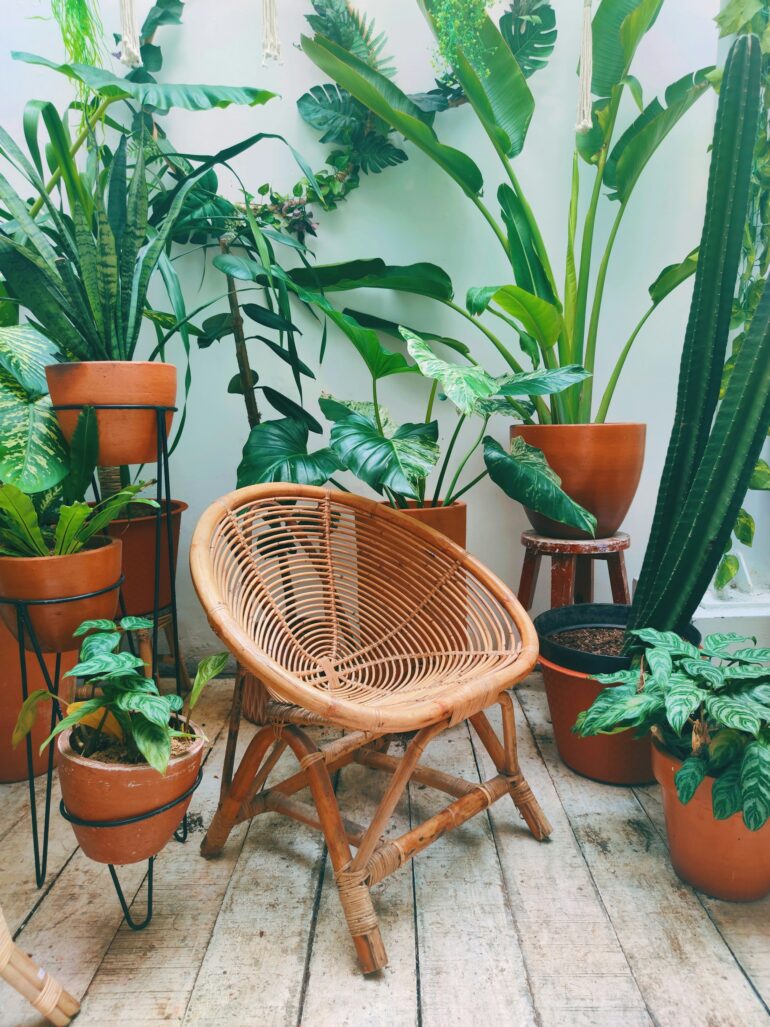
- Rattan chair — the core piece; peacock chairs and papasan chairs are the most iconic
- Rattan daybed — harder to find, immediately distinctive
- Rattan basket — the easiest entry point; widely available and affordable
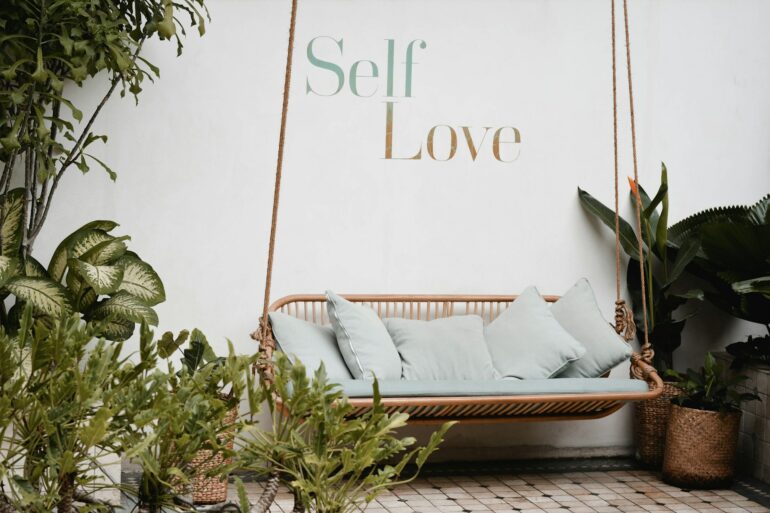
- Rattan hanging chair — the most visually dramatic piece from the 70s revival
- Rattan sofa — good condition examples are increasingly scarce
- Rattan coffee table — curly rattan versions particularly sought after
- Rattan placemat — the most affordable way to add the material to any room
- Rattan pendant lampshade — one of the best current applications in contemporary interiors
- Rattan ottoman — genuinely hard to find in good condition; worth buying when you see one
- Rattan lamp — pairs well with both vintage and contemporary interiors
FAQ: Vintage Rattan Furniture
How do I know if rattan furniture is vintage?
Vintage rattan furniture is generally defined as pieces made between 20 and 99 years ago — so roughly 1926 to 2005 for current purposes. Older pieces are considered antique. To assess a piece, start with the overall design and proportions, then look for maker’s labels from known manufacturers. Genuine vintage rattan should feel heavy and substantial, and the surface should be smooth rather than rough or splintered. Period-appropriate construction details — tight, consistent weave, solid joints — are also reliable indicators.
Is vintage rattan furniture valuable?
It depends significantly on the maker and condition. Unsigned pieces in good condition typically sell for $50–$300 at estate sales and flea markets. Pieces by named designers — Franco Albini, Charlotte Perriand, Milo Baughman — can reach $1,000 to $10,000 at auction. The Heywood-Wakefield Victorian-era rocking chairs that originally sold for $2–$17 now command $350–$1,600. Condition, provenance, and maker are the three main value drivers.
What is the difference between rattan and wicker?
Rattan is a material — a solid-stemmed climbing palm from Southeast Asia. Wicker is a construction technique — the weaving method used to make furniture from rattan, cane, bamboo, or other materials. In practical terms, most vintage wicker furniture is made from rattan. However, some pieces use bamboo, rush, or synthetic substitutes, which affects both durability and value.
Where is the best place to buy vintage rattan furniture?
Estate sales and flea markets offer the best prices — rattan is heavy and difficult to ship, so it tends to be underpriced locally relative to its online value. Thrift stores are worth checking regularly for affordable pieces. For a wider selection and price comparison, Chairish, 1stDibs, and Etsy all have substantial vintage rattan inventories. Check completed eBay listings to calibrate fair market prices before buying in person.