



The flea market meaning is something many shoppers have wondered about — and the answer is more interesting than you might expect. Flea markets come in all shapes and styles, from seasonal street markets to year-round indoor complexes, from carefully curated antique fairs to neighbourhood car boot sales. Their popularity has sparked genuine curiosity about where the name came from, what it really means and how it differs from related terms like swap meet, brocante and yard sale. Whether you’re a veteran collector or a newcomer to secondhand shopping, a little background helps — and it also clarifies why some events calling themselves “flea markets” don’t quite fit the bill.
What Is the Meaning of Flea Market?

At its core, a flea market is a place where merchants sell secondhand goods. More traditional markets set up alongside streets and are therefore seasonal — dependent on weather and footfall. To meet year-round demand, however, many indoor marketplaces now operate in permanent buildings throughout the year.
Each flea market is unique. Quality ranges from genuine antiques and vintage collectibles to general thrift-type articles and outright junk. Dealers can be seasoned professionals or occasional hobbyists. The term covers an enormous spectrum — which is precisely why understanding the nuances between different types of market helps shoppers set realistic expectations before they visit. For reviews of the world’s finest examples, our interactive flea market map covers more than 1,200 markets worldwide.
Where Did the Name “Flea Market” Come From?

The origin of the term is somewhat mysterious, but the prevailing theory traces it back to the Paris bazaars of the 1860s. According to this account, a clever bargain hunter browsing the tattered wares and flea-infested old furniture on offer nicknamed the market le marché aux puces — literally “market of fleas.” The name stuck, crossed the Channel and the Atlantic, and became the universal term for secondhand trading events of all kinds.

A second theory points to urban redevelopment under Napoleon III. As city planners sought to modernise central Paris, secondhand dealers were displaced from the city centre and forced to relocate outside the walls near Porte de Clignancourt. These exiled traders reopened their stalls in the new location — and some historians argue the market was dubbed a “flee market” (those who had fled) before the spelling shifted to “flea.” Both theories are plausible, and neither has been definitively proved.
Other Names for Flea Markets Around the World
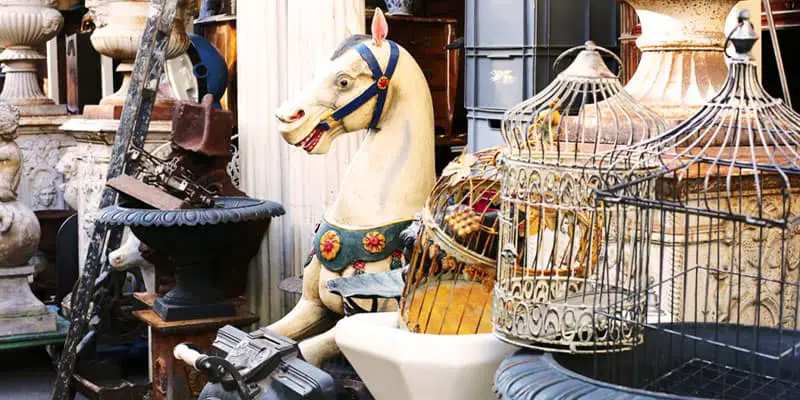
Flea markets go by different names depending on location and format. Understanding these distinctions is part of knowing what to expect before you arrive.
A swap meet is a broad term covering venues primarily for bartering and trading, though in practice most swap meets operate as straightforward secondhand sales. The term is common in the American Southwest and West Coast. An antique market or vintage market, by contrast, implies a higher standard of merchandise — curated, collectible items rather than general household goods.
A garage sale or yard sale is an informal, pop-up event where private individuals sell household items from their own property. The highway yard sale — such as the famous 127 Corridor Sale — is a more organised version that groups multiple sellers along scenic roadside routes stretching for hundreds of miles. The car boot sale, popular in the UK, gathers individuals who sell directly from the boot (trunk) of their cars in a car park or field — a format that sits between a garage sale and a traditional flea market in terms of organisation.

In France, the vocabulary is particularly rich. A brocante is a professional secondhand market; a vide-grenier (literally “attic emptier”) is the equivalent of a garage sale; and a braderie is a festive street market combining commerce with food and entertainment. For a full guide to these distinctions, see our article on idioms you will hear at French flea markets.
Frequently Asked Questions
Why is it called a flea market?
The most widely accepted theory traces the term to Paris in the 1860s, where a buyer reportedly nicknamed the outdoor secondhand markets le marché aux puces — “market of fleas” — because the old furniture and clothing on sale was often infested with fleas. The name spread across Europe and eventually became the universal term for secondhand trading events. A secondary theory suggests the name derives from dealers who “fled” central Paris during urban redevelopment, with “flee market” later evolving into “flea market.”
What is the difference between a flea market and a swap meet?
The terms are often used interchangeably, but there is a subtle distinction. A swap meet originally referred to events organised around bartering and trading goods rather than cash sales. Today, most swap meets operate as conventional secondhand sales, but the term tends to imply a broader, less curated selection of goods — often including new merchandise — compared to a flea market, which more typically emphasises vintage, antique or collectible items.
What is the French word for flea market?
The French term is marché aux puces — literally “market of fleas.” This is also where the English term originates. In France, the vocabulary for secondhand markets is more nuanced: a brocante is a professional antique and secondhand market, a vide-grenier is the equivalent of a garage sale and a braderie is a large festive street market. The most famous marché aux puces in the world is the Marché aux Puces de Saint-Ouen in Paris, with over 2,000 shops.