

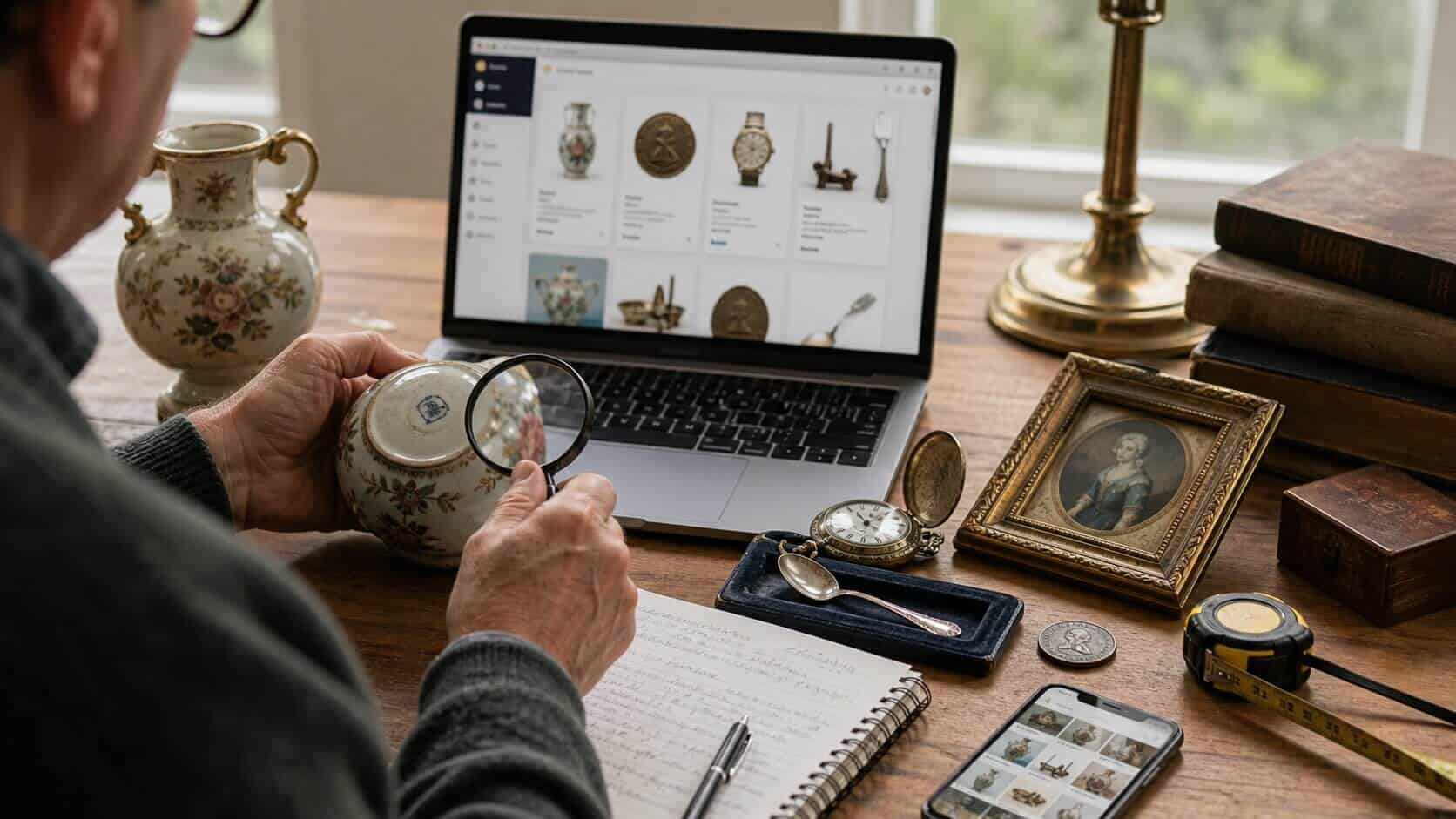

You find a ceramic figurine at a yard sale, pay three dollars, and spend the drive home wondering whether it’s worth thirty or three hundred. Online antique appraisals exist precisely for that moment. They’re faster than booking a local specialist, cheaper than a formal estate appraisal, and — depending on which route you take — surprisingly authoritative.
Collectors use them for more than curiosity. A credible valuation can support an insurance claim, justify a resale price, or simply confirm that the piece you almost passed over was worth picking up. Below are five of the most practical options, ranging from paid expert consultations to free community opinions, so you can match the method to what the item actually needs.
Option #1 for Online Antique Appraisals: JustAnswer
JustAnswer connects you directly with certified appraisers across a wide range of specialties — antique furniture, paintings, rare books, jewellery and more. Experts are available around the clock, and consultations happen via chat or phone, so you’re not waiting for a local appointment slot. Unlike subscription-based services, JustAnswer charges per enquiry, which makes it a sensible choice when you have one specific piece rather than an ongoing research habit.
To get useful feedback, send clear photographs from multiple angles alongside any item description you can provide — signatures, maker’s marks, manufacturer names and known provenance all help the appraiser give a sharper answer. The more context you include upfront, the less back-and-forth you’ll need before you get a figure worth acting on.
Option #2 for Online Antique Appraisals: Antique appraisal apps
Appraisal apps bring a different kind of convenience — they’re built for the moment you’re standing in front of a piece at a flea market and need a quick read before you commit. Tools like WorthPoint’s mobile app let you photograph an item, search comparable sales and pull up market value data without leaving the stall. Go Canvas is another option aimed at both professional appraisers and informed collectors who want structured documentation on the go. Access is typically by subscription, but regular buyers and sellers often find the ongoing reference value justifies the cost.
Beyond price lookups, some apps double as educational tools. The Antiques Roadshow Appraise It Yourself game is a lighter entry point — less a valuation service than a way to sharpen your eye for quality, condition and period details. That kind of pattern recognition pays off when you’re moving fast at a flea market and need instinct backed by a little knowledge.
WorthPoint
WorthPoint sits in its own category among online appraisal tools because it isn’t really an appraisal service — it’s a price archive. The database aggregates sold listings from major auction houses, online marketplaces and dealer records, giving you access to what comparable items actually fetched rather than what someone hopes they’re worth. For collectors who want hard transaction data rather than an expert’s opinion, that distinction matters.
The depth of the archive is its real advantage. Searching a specific maker’s mark, pattern name or model number can surface dozens of comparable sales across different years and platforms, which helps you understand not just a single price point but how the market for a particular category has moved. That context is especially useful when you’re deciding whether to buy, hold or sell. Access requires a subscription, but serious collectors and resellers who price items regularly tend to recoup that cost quickly.
Option #3 for Online Antique Appraisals: Online marketplaces and auctions
Before paying for a formal appraisal, it’s worth spending twenty minutes searching completed sales on major online marketplaces and auction platforms. eBay’s sold listings filter is particularly useful — it shows you what buyers actually paid, not just what sellers are asking. Search by maker’s mark, pattern name, model number or a close physical description, then filter to completed sales to get real transaction data. That gap between asking price and final sale price is often where the most useful information lives.
Specialist auction house websites extend the same logic into higher-value territory. Many publish past results online, and a few comparable hammer prices can anchor your sense of what a piece is genuinely worth in the current market. The limitation of this approach is that it rewards collectors who already know enough to search precisely — if you can’t identify a maker or period, the results you surface may not be comparable at all. Use it as a cross-check alongside a more guided option rather than a standalone answer.
Option #4 for Online Antique Appraisals: Free online antique appraisal
Not every appraisal question needs a paid service behind it. Collector communities on Facebook, Reddit and dedicated forums can offer surprisingly informed opinions — often within hours of posting a clear photograph. The key is targeting the right group. A community focused on American art pottery will give you a far more precise read on a Roseville vase than a general antiques page, and specialist groups for categories like vintage cameras, Art Deco jewellery, militaria or mechanical toys can be equally sharp within their lane.
Think of a community opinion as a first diagnosis rather than a certified verdict. The quality of feedback varies with the specificity of the group and the clarity of your photos, but for a quick flea market sanity check — should I pay this asking price? is this mark genuine? — a knowledgeable crowd can save you from both overpaying and underselling. Where the free route falls short is on documentation: a collector’s forum post carries no weight with an insurer or an estate. For anything you plan to insure, sell at auction or dispute legally, pair the community opinion with a paid expert assessment.
Option #5 for Online Antique Appraisals: AI-powered identification
AI tools like Google Lens, ChatGPT and specialized apps (Artsy, Identifier) have made instant object recognition surprisingly practical. Upload a photograph and the AI will identify the item, provide historical context, suggest similar pieces on the market, and often surface price data from recent sales. For a quick first read on an unknown piece — is this Roseville pottery or a reproduction? — AI identification can point you in the right direction within seconds.
The limitations are real, however. AI cannot verify authenticity through a photograph alone; it cannot assess condition nuances that affect value (a loose joint, subtle crazing, or replaced parts), and it occasionally produces confident-sounding but incorrect identifications. Most importantly, AI lacks expertise in rare or niche categories where a human specialist would spot red flags instantly.
Think of AI as a research assistant, not an appraiser. It’s useful for narrowing possibilities, finding comparable sales and testing initial hunches before committing time or money. For items worth insuring or selling at serious auction, pair any AI findings with human verification — a specialist forum, a WorthPoint deep dive, or a paid expert opinion.
Choosing the Right Approach
Each of the options above occupies a different point on the spectrum between speed, cost and authority. A free AI scan or community post can answer a quick flea market question in minutes; a certified expert via JustAnswer carries weight with insurers and estate attorneys; WorthPoint, marketplace research and AI identification sit usefully in between. Match the tool to the stakes and your confidence level.
For curiosity and quick flea market sanity checks, start with AI identification or a community forum — both are fast and free. For items you’re seriously considering buying or already own, use AI and marketplace research to narrow the field, then verify with a specialist forum or WorthPoint. If you’re planning to insure, auction, dispute ownership or make a significant investment in a piece, invest in a documented expert opinion from a certified appraiser via JustAnswer. A layered approach — AI identification followed by community input, followed by paid expertise for high-stakes decisions — gives you the best balance of speed, cost and confidence.

Frequently Asked Questions
Are online antique appraisals legally valid?
It depends on the service and how the appraisal is delivered. A written opinion from a certified appraiser — even one conducted remotely — can carry legal or insurance weight if it meets the required professional standards. Community forum opinions and marketplace comparisons do not. If you need documentation for an estate, insurer or legal dispute, confirm that the appraiser is credentialed and that the report format meets the relevant requirements before you commission it.
How accurate are online appraisals compared to in-person ones?
For most decorative antiques and collectibles, a knowledgeable expert working from clear, well-lit photographs can produce a reliable valuation. The main limitation is condition: surface wear, repairs and structural issues that affect value significantly are easier to assess in person. If an item’s condition is a key variable — furniture, ceramics, textiles — a remote appraisal is a strong starting point, but an in-person inspection may be worth arranging before a major transaction.
What photos should I send for an online appraisal?
Shoot in good natural light and capture the item from multiple angles: front, back, sides, top and base. Close-ups of any signatures, maker’s marks, labels, stamps or hallmarks are essential. Also photograph any damage, repairs or unusual features. The more completely you document the object, the more precise and useful the response will be — this applies whether you’re submitting to a paid expert or posting to a collector community.
Is it worth paying for an appraisal on a low-value item?
Generally, no — unless you have a specific reason to suspect the item is more valuable than it appears. For everyday flea market finds, start with the free options: a marketplace search for completed sales or a well-targeted collector community can give you a working number at no cost. Reserve paid services for items where the appraisal fee is proportionate to the potential value, or where you need formal documentation.
Can I use WorthPoint for items that aren’t antiques?
Yes. WorthPoint covers antiques, collectibles, vintage items and fine art, so its database is broadly useful for twentieth-century objects, toys, mid-century design, vintage fashion and similar categories — not only traditional antiques. The key factor is whether comparable items have sold through the auction houses and marketplaces that feed its database. Highly specialised or regional items may have thinner coverage, so cross-check with a targeted marketplace search if WorthPoint returns limited results.
Can AI really identify antiques accurately?
AI is surprisingly good at broad identification — telling a Roseville vase from a reproduction, recognizing a maker’s mark, surfacing comparable sales prices — but it has real limits. It cannot authenticate pieces through a photograph alone, cannot assess condition nuances that affect value (hidden damage, repairs, replaced components), and occasionally produces confident but incorrect identifications, particularly in niche or regional categories. Use AI as a research starting point, not a final verdict. For anything valuable or uncertain, follow AI findings with human verification — a specialist forum, marketplace research, or a certified appraisal.
Which AI tools are best for antique appraisal?
Google Lens and ChatGPT (with clear photos) are free and surprisingly capable for broad identification. Specialized apps like Artsy and Identifier are designed for art and antiques specifically. For actual price research and condition assessment, combine AI with WorthPoint or marketplace data. AI identification works best with clear, well-lit photographs of the object, maker’s marks, and any distinguishing features.