

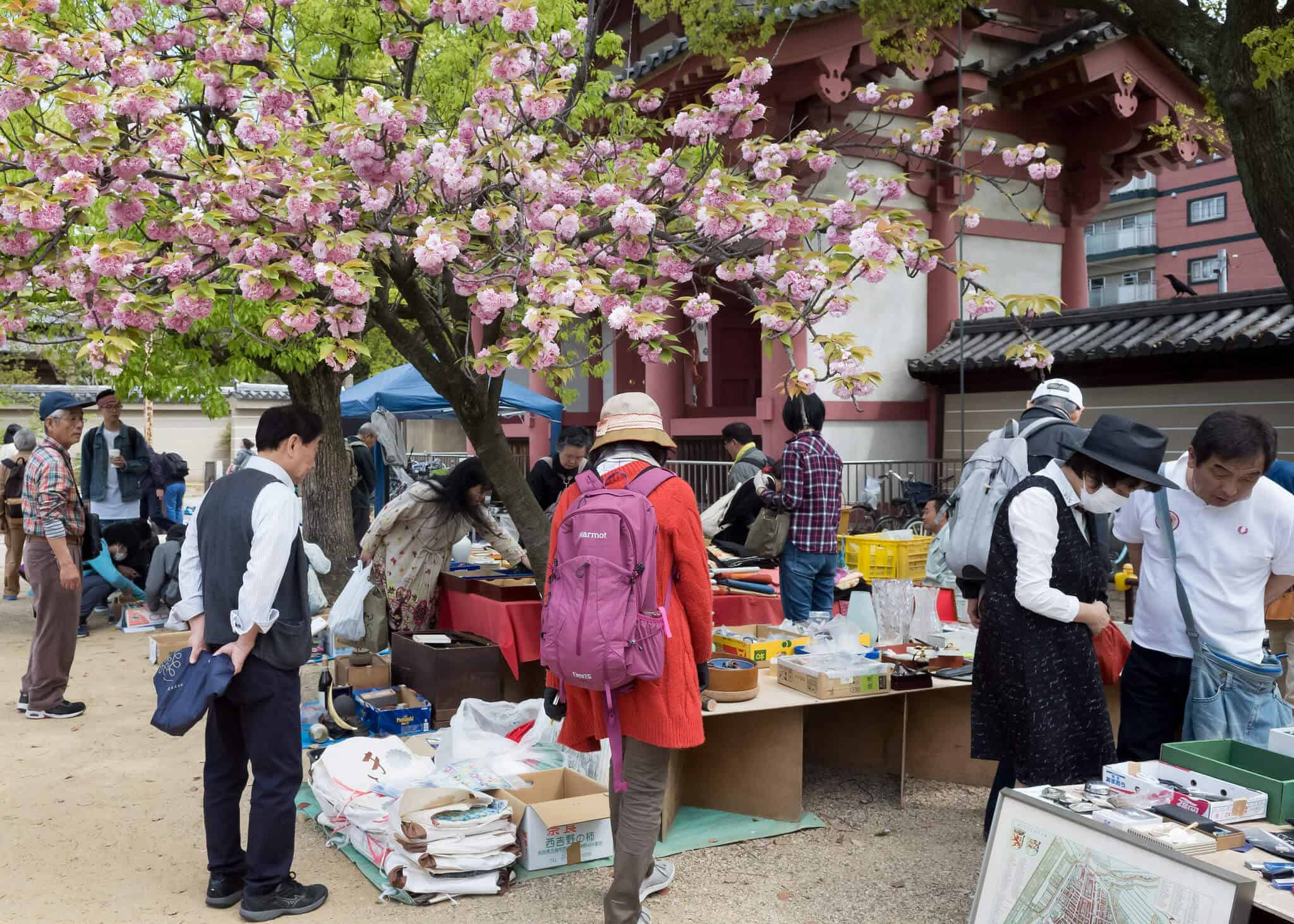

The best flea markets in Tokyo are unlike anything else in the world. Tucked inside the grounds of Shinto shrines, spread across stadium car parks and laid out beneath the glass atrium of the Tokyo International Forum, they offer a side of the city that no department store or tourist trail will ever give you. Whether you’re hunting for a genuine Edo-era ceramic, a vintage kimono at a fraction of boutique prices, or simply want to spend a Sunday morning the way a lot of Tokyoites do, this guide covers every market worth your time — shrine fairs, large-scale weekend markets, and a few unmissable seasonal events.
One practical note before you set off: most outdoor markets in Tokyo are cancelled when it rains, and antique fair schedules can shift without much notice. Always check the official website or the market’s social media account before making the trip. For a live, constantly updated map of markets across Japan, the Fleamapket directory is the most reliable resource we know.
Shrine & Temple Flea Markets in Tokyo
Tokyo’s shrine and temple markets are the heart of the city’s antique scene. The combination of sacred grounds, patient vendors and genuinely old stock — pottery, lacquerware, woodblock prints, hand-stitched textiles — makes them the first stop for serious collectors and curious visitors alike. Most run monthly on a fixed schedule, though a handful operate weekly.
Oedo Antique Market — 大江戸骨董市
If you visit only one market in Tokyo, make it this one. The Oedo Antique Market at the Tokyo International Forum is Japan’s largest outdoor antique fair, and the contrast between the venue — a soaring glass-and-steel convention centre — and the wares on offer (Edo-era ceramics, hand-painted screens, worn lacquerware, rows of vintage kimono) makes for one of the more memorable mornings you can spend in the city. Around 250 dealers set up on the first and third Sunday of every month, with no August edition due to the summer heat. Arrive early: the market fills up fast, and the best pieces rarely survive past midday. Most stalls are cash only, but there are convenience stores and an ATM inside the Forum building. Polite haggling is accepted — and quietly expected.
📍 Address: Tokyo International Forum, 3-5-1 Marunouchi, Chiyoda-ku, Tokyo
📅 When: 1st and 3rd Sunday of every month (not held in August)
🕐 Hours: 09:00–16:00 (vendors begin packing up around 15:00)
💰 Admission: Free
🚃 Access: 1-minute walk from Yurakucho Station (JR Yamanote Line); 5-minute walk from Tokyo Station
🌐 Website: t-i-forum.co.jp
Review of Oedo Antique Market on Fleamapket
Tomioka Hachimangu Shrine Flea Market — 富岡八幡宮骨董市
Tomioka Hachimangu, the largest Hachiman shrine in Tokyo, has been drawing antique dealers to its grounds for decades. The market runs on the 15th and 28th of each month, with 50 to 80 stalls selling everything from Imari porcelain and vintage toys to old kimonos and rare books. The shrine itself — founded in 1627 and historically associated with sumo, which was held here throughout the Edo period — is worth the trip regardless. The market doesn’t run in January.
📍 Address: 1-20-3 Tomioka, Koto-ku, Tokyo
📅 When: 15th and 28th of every month (except January)
🕐 Hours: 08:00–15:30
💰 Admission: Free
🚃 Access: 3-minute walk from Monzen-Nakacho Station (Tokyo Metro Tozai Line / Toei Oedo Line)
🌐 Website: tomiokahachimangu.or.jp
Review of Tomioka Hachimangu Flea Market on Fleamapket
Hanazono Shrine Antique Market — 花園神社青空骨董市
Tucked behind the Kabukicho entertainment district in Shinjuku, Hanazono Shrine feels like a different city entirely. The market runs almost every Sunday from early morning until around 15:00, with around 40 vendors selling antique kimonos, scroll paintings, small furniture and curiosities. Because it’s in Shinjuku, it’s one of the most convenient shrine markets to combine with a full day out. That said, it can be cancelled in bad weather or during shrine festivals — check the shrine’s social media before heading over.
📍 Address: 5-17-3 Shinjuku, Shinjuku-ku, Tokyo
📅 When: Most Sundays (cancelled during shrine festivals and on 27 December and 3 January)
🕐 Hours: 06:30–15:00
💰 Admission: Free
🚃 Access: 3-minute walk from Shinjuku-sanchome Station (Tokyo Metro Marunouchi Line / Toei Shinjuku Line); 7-minute walk from Shinjuku Station (East Exit)
🌐 Website: hanazono-jinja.or.jp
Review of Hanazono Shrine Flea Market on Fleamapket
Arai Yakushi Temple Antiques Fair — 新井薬師アンティーク・フェア
This is a smaller, calmer affair than the Oedo or Tomioka markets — 50 to 80 stalls on the first Sunday of every month (not February) in the grounds of Arai Yakushi, a Shingon Buddhist temple in Nakano dedicated to Yakushi Nyorai, the Healing Buddha. The temple became famous in the Edo period after a prayer here reportedly cured a serious eye condition suffered by a daughter of the fifth Tokugawa shogun. It’s a good pick for collectors who prefer a more intimate atmosphere and genuinely old stock over volume.
📍 Address: 5-3-5 Arai, Nakano-ku, Tokyo
📅 When: 1st Sunday of every month (except February)
🕐 Hours: 08:30–15:30
💰 Admission: Free
🚃 Access: 5-minute walk from Araiyakushi-mae Station (Seibu Shinjuku Line); 15-minute walk from Nakano Station (North Exit, JR Chuo Line)
🌐 Website: kottouichi.jp
Review of Arai Yakushi Temple Flea Market on Fleamapket
Nogi-Jinja Shrine Flea Market — 乃木神社骨董蚤の市
The Nogi-Jinja market draws a notably international crowd — not surprising given its location in Akasaka, close to Roppongi, one of Tokyo’s most international neighbourhoods. Around 40 antique dealers set up on the fourth Sunday of every month (except November), with a good mix of Japanese and Western antiques. The shrine itself is dedicated to General Maresuke Nogi, one of the pivotal figures of the Meiji era, and his former residence — where he and his wife died on the day of Emperor Meiji’s funeral in 1912 — is preserved on the grounds and open to visitors.
📍 Address: 8-11-27 Akasaka, Minato-ku, Tokyo
📅 When: 4th Sunday of every month (except November)
🕐 Hours: 08:00–15:00
💰 Admission: Free
🚃 Access: 1-minute walk from Nogizaka Station, Exit 1 (Tokyo Metro Chiyoda Line)
🌐 Website: nogijinja.or.jp
Review of Nogi-Jinja Shrine Flea Market on Fleamapket
Gokokuji Antique Fair — 護国寺骨董市
The Gokokuji Antique Fair is a reliable monthly fixture for anyone staying in the northeast of the city. Between 25 and 40 vendors turn up on the second Saturday of every month, selling the kind of traditional Japanese items — lacquerware, ceramic teaware, folding screens, woodblock prints — that travellers tend to go home raving about. The temple itself, built in 1681 at the request of the mother of the fifth Tokugawa shogun, houses the oldest surviving wooden temple building in Tokyo, having outlasted both the 1923 Great Kanto Earthquake and World War II. That alone makes the visit worthwhile.
📍 Address: 5-40-1 Otsuka, Bunkyo-ku, Tokyo
📅 When: 2nd Saturday of every month
🕐 Hours: 07:00–15:00
💰 Admission: Free
🚃 Access: 1-minute walk from Gokokuji Station, Exit 3 (Tokyo Metro Yurakucho Line)
🌐 Website: gokokuji.or.jp
Review of Gokokuji Temple Flea Market on Fleamapket
Takahata Fudoson Temple Flea Market — 高幡不動ござれ市
With 120 dealers, the Takahata Fudo Antique Fair is one of the larger shrine markets in the Tokyo area, held on the third Sunday of every month in the grounds of Takahata Fudoson Temple in Hino City, on the western edge of the metropolis. The temple belongs to the Shingon sect of Buddhism and contains a remarkable collection of designated cultural relics, including 1,000 Jizo statues in the five-storey pagoda hall. The market itself draws serious antique dealers alongside private sellers, so the quality of stock tends to be higher than at purely amateur markets.
📍 Address: 733 Takahata, Hino-shi, Tokyo
📅 When: 3rd Sunday of every month
🕐 Hours: 07:00–15:00
💰 Admission: Free
🚃 Access: 5-minute walk from Takahatafudo Station (Keio Line)
🌐 Website: takahatafudoson.or.jp
Review of Takahata Fudoson Temple Flea Market on Fleamapket
Yasukuni Shrine Flea Market — 靖国神社青空骨董市
The antique fair at Yasukuni Shrine is a modest, low-key affair — 10 to 20 dealers, every Sunday, tucked into a corner of one of Japan’s most historically significant and politically discussed shrines. Founded by Emperor Meiji, Yasukuni commemorates those who died in service to the Empire of Japan. The market is not the most impressive in Tokyo, but if you’re visiting the shrine anyway (and its adjacent Yushukan war museum is genuinely worth a visit), it’s a pleasant add-on for browsing smaller antiques and curiosities.
📍 Address: 3-1-1 Kudankita, Chiyoda-ku, Tokyo
📅 When: Every Sunday, sunrise to sunset
💰 Admission: Free
🚃 Access: 5-minute walk from Kudanshita Station (Tokyo Metro Tozai, Hanzomon and Toei Shinjuku Lines); 10-minute walk from Iidabashi Station West Exit (JR Chuo Line)
🌐 Website: yasukuni.or.jp
Review of Yasukuni Shrine Flea Market on Fleamapket
Large Weekend Flea Markets in Tokyo
For sheer scale and variety, Tokyo’s big weekend markets are in a category of their own. These are where you find the 600-stall car boot sales, the fashion hunters, the families clearing out their storage rooms — and occasionally, the odd extraordinary find buried under tables of bric-a-brac.
Ohi Racecourse Flea Market (Tokyo City Flea Market) — 大井競馬場
The Ohi Racecourse Flea Market is Tokyo’s largest regular flea market by stall count — around 600 sellers set up in the parking area of the Oi horse racing track two or three times a month, rain or shine. It’s less of an antique market and more of a proper car boot sale: you’ll find second-hand clothing, furniture, household appliances, vintage toys, manga and all the category-less junk that makes hunting genuinely exciting. Prices start at ¥100. The market is run by the Tokyo Citizens Recycling Association (Risaikuru-Undo Shiminno-kai).
📍 Address: 2-1-2 Katsushima, Shinagawa-ku, Tokyo 140-0012
📅 When: Two or three times a month, Saturday and Sunday
🕐 Hours: 08:30–14:30 (October–March) / 09:00–15:00 (April–September)
💰 Admission: Free
🚃 Access: 3-minute walk from Oi Keibajo-mae Station (Tokyo Monorail, two stops from Hamamatsucho Station); 10-minute walk from Ekaigawa Station (Keihin Kyu-ko Line)
🌐 Website: trx.jp
Review of Ohi Racecourse Flea Market on Fleamapket
Ajinomoto Stadium Flea Market
Nearly 800 stalls make this one of the biggest regularly held flea markets in Japan. The range is genuinely wide — organic vegetables, handmade crafts, vintage clothing, furniture and antiques all share space in the shadow of one of Tokyo’s main football venues. Standard admission is ¥300 from 10:00, but determined early risers can pay ¥1,000 for entry from 08:00, which is when the most coveted pieces tend to disappear.
📍 Address: Ajinomoto Stadium, 376-3 Nishi-cho, Chofu-shi, Tokyo
🕐 Hours: 09:00–16:00
💰 Admission: ¥300 (general); ¥1,000 for early entry from 08:00
🚃 Access: 5-minute walk from Tobitakyu Station (Keio Line); 20-minute walk from Tama-Bochi Mae Station (Seibu Tamagawa Line)
🌐 Website: ajinomotostadium.com
Yoyogi Park Flea Market (Shibuya Koendori Fes)
First held in 1981, the Yoyogi Park market is often described as the one that started it all — the ancestor of Tokyo’s flea market culture. The 180 stalls here lean young and fashion-forward: no professional vendors are allowed, giving it the energy of a particularly well-curated neighbourhood garage sale. Expect leather jackets, acid-wash denim, vintage concert T-shirts, sequined dresses, vinyl records, retro sneakers and heaps of the kind of Japanese miscellany that makes browsing feel like an afternoon well spent. It runs once a month on a Sunday and doesn’t operate in rain.
📍 Address: 2 Jinnan, Yoyogi-Kamizonocho, Shibuya-ku, Tokyo
📅 When: Once a month on Sunday (cancelled in rain)
🕐 Hours: 08:00–16:00
💰 Admission: Free
🚃 Access: 5-minute walk from Harajuku Station (JR Yamanote Line); 6–7 minutes from Meiji-jingu-mae Station (Tokyo Metro Chiyoda Line); next to NHK Hall
🌐 Website: antique-market.jp
Review of Yoyogi Park Flea Market on Fleamapket
Tokyo Dome Jumbo Flea Market
Japan’s largest concert and baseball venue turns over its Prism Hall once or twice a month for a 300-stall flea market. The indoor setting makes it a good option when the weather is uncertain, and the central location — close to multiple subway lines — means it’s easy to fold into a day out in central Tokyo.
📍 Address: Tokyo Dome City, 1-3-61 Kouraku, Bunkyo-ku, Tokyo
📅 When: Once or twice a month
🕐 Hours: 10:00–16:00
💰 Admission: Free
🚃 Access: Near Suido-bashi Station East Exit (JR Lines); Suido-bashi Station A2 Exit (Toei Mita Line); Kasuga Station A1 Exit (Toei Oedo Line); Korakuen Station exits 1 & 2 (Tokyo Metro Nanboku and Marunouchi Lines)
Machida Tenmangu Antique Fair
A reliable outdoor antique market on the first day of every month (except January), with over 120 stalls set up dawn to dusk on the grounds of Machida Tenmangu Shrine. One of the better-value options in the greater Tokyo area: the market runs rain or shine, prices are reasonable, and the journey out to Machida — a city of 400,000 in the western suburbs — makes for an easy half-day trip from Shinjuku (35 minutes by express train on the Odakyu Line).
📍 Address: 1-21-5 Haramachida, Machida-shi, Tokyo
📅 When: 1st day of every month except January
🕐 Hours: 07:00–15:00
💰 Admission: Free
🚃 Access: Machida Station (JR Yokohama Line / Odakyu Line), 35 minutes from Shinjuku by express
Review of Machida Tenmangu Flea Market on Fleamapket
Shinjuku Chuo Park Flea Market
The Shinjuku Central Park market sits in the shadow of the Tokyo Metropolitan Government Building — an “oasis among the skyscrapers”, as regular visitors describe it. Around 200 stalls of private sellers (no professional vendors) offer household tools, vintage clothing and children’s items every other Saturday. It’s a genuinely neighbourhood feel for a market that happens to be in one of Tokyo’s busiest districts.
📍 Address: Nishi-Shinjuku 2-11, Shinjuku-ku, Tokyo
📅 When: Every other Saturday (cancelled in rain)
🕐 Hours: 10:00–16:00
💰 Admission: Free
🚃 Access: A short walk from Tocho-mae Station (Toei Oedo Line); 10-minute walk from JR Shinjuku Station
Neighbourhood Markets & Indoor Options
Shimokitazawa Flea Market
Shimokitazawa has long been Tokyo’s vintage heartland — a neighbourhood of narrow lanes, independent record shops, live music venues and second-hand clothing stores that still hasn’t been smoothed into corporate blandness. The flea market held at Senrogai Open Space brings that spirit into open-air format: high-quality vintage clothing, handmade accessories, independent creators and occasional rare finds from international sources. It’s a younger, more curated crowd than the shrine markets, and the neighbourhood itself is worth an afternoon regardless.
📍 Address: Senrogai Open Space, Shimokitazawa, Setagaya-ku, Tokyo
📅 When: Check the event’s social media for current dates
🌐 Search “Shimokitazawa Flea Market” on Instagram for the most current schedule
Shinagawa Inter City Flea Market
A practical, all-weather option near one of Tokyo’s main Shinkansen hubs. Around 120 stalls sell everything from vintage clothing and handmade silver jewellery to neon T-shirts and trainers. The indoor setting means no rain cancellations, there are cafes on the same floor, and parking is available (¥300/30 minutes, or free for two hours with a ¥2,000 purchase in the building).
📍 Address: Shinagawa InterCity, Kounan 2-15-2, Minato-ku, Tokyo
🕐 Hours: 11:00–16:00
💰 Admission: Free
🚃 Access: Direct from the South Exit of Shinagawa Station (JR Lines)
Shinjuku Nomura Building Flea Market
A well-established monthly market with around 300 stalls covering the full gamut of flea market stock: cameras, collectable watches, vintage guitars, old American household items, second-hand clothing and sneakers. Convenient location with paid parking and clean facilities nearby.
📍 Address: Shinjuku Nomura Building, 1-26-2 Nishi-Shinjuku, Shinjuku-ku, Tokyo
📅 When: Usually one weekend per month
🕐 Hours: 08:30–15:00
💰 Admission: Free
🚃 Access: 5-minute walk from JR Shinjuku Station West Exit; 3-minute walk from Nishi-Shinjuku Station (Tokyo Metro Marunouchi Line)
Seasonal Events Not to Miss
Setagaya Boroichi
Held only twice a year — on 15–16 January and 15–16 December — the Setagaya Boroichi is one of Japan’s oldest flea markets, with a history stretching back more than 440 years. Around 700 stalls line Boroichi Dori Street from the early morning hours, selling everything from plants, clothing and antiques to the “boro” (scraps) that gave the market its name. It runs from 09:00 to 20:00, and the late evening atmosphere, with lanterns and food stalls, is particularly memorable.
📍 Address: Boroichi Dori, Setagaya, Tokyo
📅 When: 15–16 January and 15–16 December, annually
🕐 Hours: 09:00–20:00
🚃 Access: Setagaya Station or Kamimachi Station (Tokyu Setagaya Line)
Heiwajima Antiques Fair
Japan’s largest and oldest indoor antique event, held at the Tokyo Ryutsu Center in Heiwajima several times a year. Over 500 dealers from Hokkaido to Okinawa gather for three-day runs, with stock ranging from museum-quality Japanese antiques and rare ceramics to vintage toys, swords and small curios. It’s the place serious collectors make time for — the scale is genuinely unlike anything at the regular weekend markets.
📍 Address: Tokyo Ryutsu Center, 6-1-1 Heiwajima, Ota-ku, Tokyo
📅 When: Several times a year (check the official site for current dates)
🕐 Hours: Typically 10:00–17:00
🚃 Access: 1-minute walk from Ryutsu Center Station (Tokyo Monorail, transfer at Hamamatsucho Station, JR Line)
🌐 Website: Check the official Heiwajima Antique Fair website for upcoming dates
Tips for Visiting Flea Markets in Tokyo
A few things that make the difference between a good visit and a great one. Arrive early — at the shrine markets especially, the best pieces go fast, and serious dealers are often there before the official opening. Bring cash: many stalls don’t accept cards, and although convenience stores and ATMs are usually nearby, it’s easier not to have to leave mid-browse. Bring small change too — ¥100 coins and ¥1,000 notes are the standard negotiating currency.
On haggling: it happens, but Japan isn’t a haggling culture in the way some markets in Europe or Asia are. The phrase “Yasuku naranai?” (“Won’t you make it a little cheaper?”) is understood, and if you’re buying more than one item from the same stall, a discount is often quietly offered without you having to ask. Don’t be pushy — a friendly, interested approach works far better. Finally, remember that almost all outdoor markets cancel in rain; always check the market’s website or social media accounts before heading out.
For the most current schedules and maps of all flea markets in the Tokyo area, the Fleamapket Japan directory is updated regularly and covers markets across the whole country.
Book Your Stay in Tokyo
Most of Tokyo’s best flea markets are spread across different neighbourhoods — Shinjuku, Koto-ku, Marunouchi, Chofu, Shibuya. Staying somewhere central, such as Shinjuku, Shibuya or around Tokyo Station, puts you within easy reach of almost all of them by metro. The city’s transport network is efficient enough that even the western-suburbs markets (Machida, Takahata) are no more than 40 minutes from the centre.
Frequently Asked Questions
When are flea markets held in Tokyo?
Most of Tokyo’s flea markets are held on weekends — typically on specific Sundays or Saturdays each month. Shrine and temple markets tend to follow a fixed monthly schedule (the first Sunday, the 15th and 28th of the month, and so on), while larger event-style markets like the Tokyo Dome or Ajinomoto Stadium markets operate once or twice a month. The Oedo Antique Market at the Tokyo International Forum runs on the first and third Sunday of every month. Always check the individual market’s website before going, as cancellations due to rain or shrine festivals are common.
What is the best antique market in Tokyo?
For quality and variety, the Oedo Antique Market at the Tokyo International Forum is the standout. With around 250 professional dealers, it’s Japan’s largest outdoor antique fair and covers everything from Edo-era ceramics and vintage kimonos to Western antiques and retro homeware. For a more intimate atmosphere with genuinely old stock, the Tomioka Hachimangu Shrine market (15th and 28th of every month) and the Gokokuji Antique Fair (second Saturday each month) are both excellent. For something on a truly exceptional scale, the Heiwajima Antiques Fair — held several times a year indoors — brings together over 500 dealers from across Japan.
What can you buy at flea markets in Tokyo?
At the shrine and antique markets: vintage kimonos and obi sashes, Imari and Arita porcelain, lacquerware, ukiyo-e woodblock prints, old coins, ceramics, tea ceremony sets, folding screens and small furniture. At the larger weekend markets: second-hand clothing (particularly at Yoyogi, which leans fashion-forward), vintage vinyl records, cameras, collectables, retro toys, manga, household items and occasionally unexpected Western antiques that have made their way into Japanese collections over the decades.
Can you haggle at Tokyo flea markets?
Yes, but gently. Japan is not a culture where hard bargaining is the norm, and pushing too firmly tends to end conversations rather than lower prices. The phrase “Yasuku naranai?” — roughly “could you make it a little cheaper?” — is understood and accepted at most stalls. If you’re buying multiple items from the same seller, a combined discount is often offered without prompting. The key is to show genuine interest rather than leading with a counter-offer.