

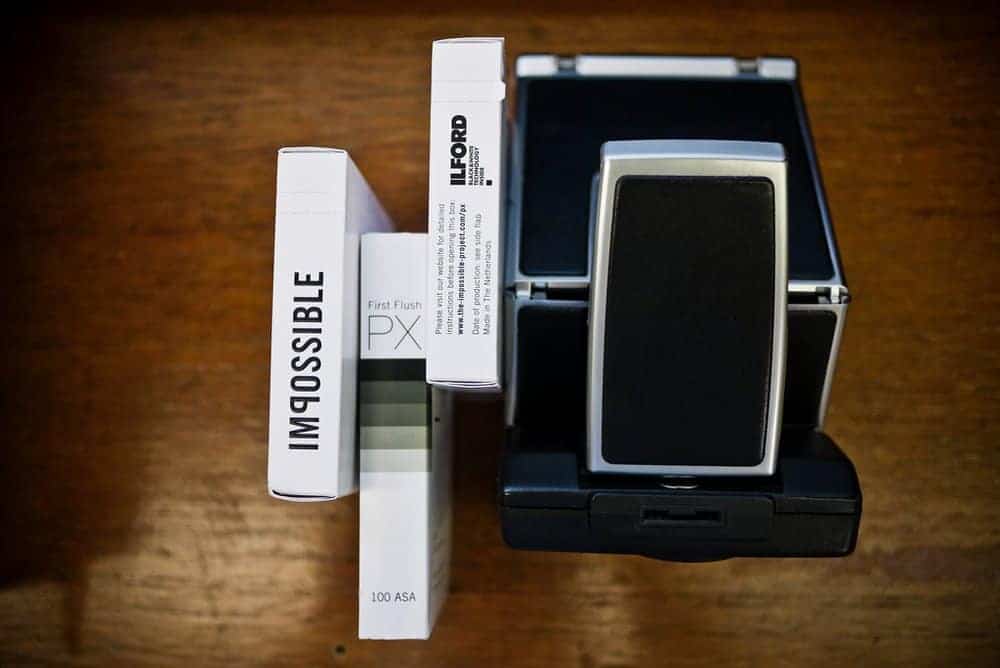

On a June morning in 2008, the last Polaroid film factory in the world switched off its production line. The plant was in Enschede, a quiet Dutch city most people outside the Netherlands couldn’t locate on a map. What it had been making — those small, square sheets of self-developing film — had once filled photo albums in a billion homes across sixty years. Now the chemicals had run out, Polaroid had pivoted to digital, and that appeared to be that.
Two people disagreed. André Bosman and Florian Kaps, both instant-photography obsessives, looked at the shuttered Enschede factory and saw something different: a starting point. The Impossible Project Polaroid revival they launched that same month was, by any rational measure, exactly what the name suggested. Reformulating instant film chemistry from scratch, sourcing components that no longer had a commercial supply chain, and persuading the world that analogue photography was worth saving — none of it was straightforward.
And yet it worked. What started as a film-rescue operation grew into a full camera business, reshaped the vintage photography market, and eventually folded back into the Polaroid name itself. For collectors and flea-market hunters who’ve spent years tracking down working Polaroid 1000, Polaroid 600s and SX-70s, the story matters: it’s the reason usable film still exists for those cameras today.
Polaroid Cameras Worth Knowing: Models, Variants and What Sets Them Apart
Not all Polaroid cameras are the same thing, and at a flea market that distinction matters more than it might seem. The hardware varies considerably across decades of production, and compatibility with currently available film depends entirely on which model you’re holding.
The SX-70: the original folding icon
The SX-70, introduced in the early 1970s, is the camera most associated with Polaroid’s creative reputation. It folds flat, opens into a single-lens reflex body, and has an unmistakable industrial-design quality — brushed chrome and tan leatherette on the original, all-chrome and black on later variants. It uses SX-70 format film, which is still produced today under the Polaroid brand. The original SX-70 and its subsequent versions, including the SX-70 Sonar (which added autofocus) and the Model 2 and Model 3 with slightly simplified controls, are all compatible with the same film packs, which makes the format relatively collector-friendly. Build quality on surviving examples varies widely; the bellows and the mirror are the first things to check.
The 600 series: the most common find
If you’re going through a box of cameras at a brocante, you’re most likely to pull out a Polaroid 600-series body. These were made in enormous quantities from the early 1980s through the 2000s and ranged from basic plastic point-and-shoots — the One600, the Sun 660, the Supercolor — to more capable models like the Impulse and the 636 Closeup. All use 600-format film, which has faster ISO than SX-70 film and remains commercially available. The tradeoff for their sheer availability is that condition is inconsistent; rollers degrade, foam light seals rot, and electronic flash circuits fail. The 600 Sun 660 with autofocus is generally regarded as the most useful everyday shooter in the series, while the rainbow-striped OneStep Express is the most visually recognisable.
The Spectra and Image series
The Spectra, released in the mid-1980s, used a wider rectangular film format — Spectra film — which gives noticeably different proportions to the finished print. Spectra bodies have a more angular, futuristic aesthetic compared to the rounded 600 cameras, and they were positioned as a premium consumer product. Spectra film is still produced but tends to be harder to source than 600 or SX-70. If you find a clean Spectra at a market, it’s worth picking up, but verify film availability before committing to regular use.
Pack-film cameras: a different category entirely
Older Polaroid models — the 100-series, the folding Land Cameras from the 1960s and 1970s — use peel-apart pack film rather than integral film. These cameras are mechanically interesting, often beautifully built, and beloved by a dedicated subset of film photographers. However, original Polaroid pack film is long out of production. A company called Fujifilm produced compatible peel-apart film for years, but that line has also since been discontinued. Some specialist producers have worked on alternatives, but availability is genuinely uncertain. A Land Camera at a market might be worth buying purely as a display object or for occasional use if you can source film — but don’t assume usability the way you can with a 600 or SX-70.
Using it today: film, accessories and what to expect
The good news for anyone who finds a working Polaroid at a market is that film still exists. The Impossible Project‘s core mission was to restart integral film production, and that effort survived its own corporate evolution — the company rebranded as Polaroid Originals in 2017 and then folded back into the Polaroid name around 2020. Whatever the branding on the box, 600-format and SX-70-format film packs are commercially available today through photography retailers and directly from Polaroid’s own channels. Spectra film is produced in smaller runs and takes more effort to find. Pack film for the older Land Cameras is a different matter entirely — see the note in the previous section.
The practical reality of shooting on any of these cameras is that the film is expensive relative to digital or even 35mm. Each pack yields a small number of exposures, and Polaroid integral film is sensitive to temperature: cold slows development dramatically, heat can wash out highlights. Shooting outdoors in winter means keeping the print in your pocket immediately after ejection. None of this is a dealbreaker, but it’s worth knowing before you load a freshly sourced camera for the first time.
For the SX-70, you’ll need SX-70-specific film — regular 600-format film runs at a significantly higher ISO and will overexpose badly unless you add an ND filter over the lens. Conversion filters designed for exactly this purpose are available from a handful of specialist accessory makers, and some sellers bundle them with SX-70 bodies. If you’re buying a naked SX-70 at a brocante, keep this in mind: the camera is usable without the filter only if you’re shooting in very low light.
The 600-series cameras are simpler in this regard — load a 600-format pack and shoot. The main accessory worth hunting for is a close-up lens attachment, sometimes called a portrait kit, which clips over the built-in lens and allows sharper focus at shorter distances. These turn up occasionally in camera lots at markets, usually loose at the bottom of a bag. Flash bars, the accessory that predates the cameras with built-in electronic flash, are largely obsolete for modern use but show up often and are useful as props or display pieces.
One practical limitation that catches people out: Polaroid cameras of the 600 era have no manual exposure control beyond a basic lighten/darken wheel. You are, in the truest sense, a point-and-shoot photographer. For most subjects in reasonable light that’s fine. But if precise control matters to you, an SX-70 — particularly a modified one — offers slightly more creative latitude, and the manual-focus SX-70 Alpha 1 is the model most often sought out by film photographers who want to work more deliberately.
Finding One in the Wild: Markets, Platforms and What to Pay
Polaroid cameras of the 600, SX-70 and Spectra lines turn up constantly at flea markets and brocantes across Europe and North America — they were mass-market products sold in enormous quantities over decades, which means supply at the secondhand end is genuinely good. The harder question is whether the one you’re looking at actually works.
At general flea markets, 600-series cameras are among the most common finds in the camera section, often sitting alongside disposables and point-and-shoot 35mm compacts. Prices vary wildly depending on whether the seller understands what they have. A OneStep Express or a similar basic 600-body might go for a few euros or dollars at a brocante where the seller just wants it gone; the same camera cleaned up and photographed well on a vintage platform can fetch several times that. The SX-70 commands notably higher prices everywhere — it reads as a design object even to people who don’t shoot film, and sellers generally know it.
Online, eBay and Etsy are the main hunting grounds. Etsy tends toward cleaned and tested examples sold by small camera refurbishers; eBay runs the full spectrum from untested barn-find bodies to professionally refurbished units with warranties. Depop and similar apps occasionally surface good finds, usually from younger sellers clearing inherited equipment. Polaroid’s own channels sell refurbished cameras directly, which removes the guesswork entirely but at a premium price — useful as a baseline for what a fully tested body is worth in the current market.

Condition Checks and Dealbreakers
The most common killer on any integral-film Polaroid is the foam light seal around the film door. It degrades over decades into a sticky black residue that no longer seals properly, causing light leaks that ruin your first few exposures. Replacing it is inexpensive if you’re comfortable with basic camera maintenance — kits are available — but it’s worth factoring in if you’re buying untested. Ask the seller directly, or look for photos of the door interior.
The rollers that spread the developer chemistry across each print are the other weak point. They should be clean and smooth; any dried chemical residue will streak your images. A seller who mentions cleaned rollers is a good sign. On a 600-series camera, test the battery by loading a film pack — the pack contains its own battery, which also powers the camera, so a fresh pack is the simplest diagnostic tool.
For the SX-70, check that the bellows — the folding leather-look body panels — aren’t cracked or punctured. Pinhole leaks in the bellows cause light streaks on film and are fiddlier to fix than a door seal. Fully fold and unfold the camera in front of a bright light source and look for any points of ingress. The mirror inside the viewfinder should be clean and reflective; a hazy mirror doesn’t affect the image but signals a camera that hasn’t been stored carefully.
Avoid any camera described as “untested, sold as-is” unless the price is very low and you’re prepared to treat it as a parts source or display piece. Film is too expensive per pack to use as a testing mechanism for a camera of uncertain function. A seller who has run even a partial pack through the camera and can show results — even imperfect ones — is worth paying a little more for.
Frequently Asked Questions
Can I still buy film for a vintage Polaroid camera?
Yes. The project that Bosman and Kaps launched in Enschede eventually rebranded — first to Polaroid Originals, then simply to Polaroid — and the film it developed for classic 600-series and SX-70 cameras continues to be manufactured and sold under the current Polaroid brand. It is available through specialist camera retailers and the official Polaroid website. Prices per pack remain higher than they were in the original Polaroid era, so factor that into your budget when buying a camera at market.
Is a cheap flea-market Polaroid worth buying, or is it a false economy?
It depends entirely on condition. A well-stored camera with clean rollers, intact light seals and a recent test pack behind it is genuinely good value at market prices. The false economy comes with untested bodies: film packs are expensive enough that running two or three through a leaky or roller-damaged camera can cost more than the difference between a cheap market find and a properly refurbished example from a specialist seller. If the seller can show you even a partial test result — imperfect images included — that is worth paying a modest premium for.
Which Polaroid model is easiest to buy and use as a beginner?
The 600 series is the most forgiving starting point. Film is straightforward to load, the camera handles exposure automatically, and working examples turn up at markets more often than any other format. The SX-70 is more elegant and foldable but requires a different film type and benefits from more careful handling. Pack-film cameras produce beautiful results but depend on peel-apart film that is harder to source, so they are better suited to collectors who already understand the format.