

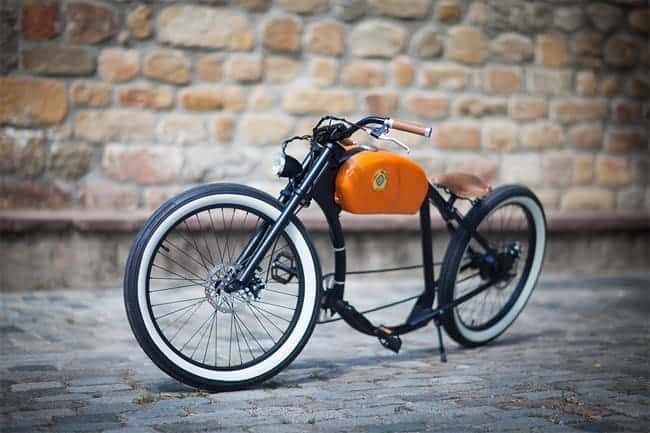
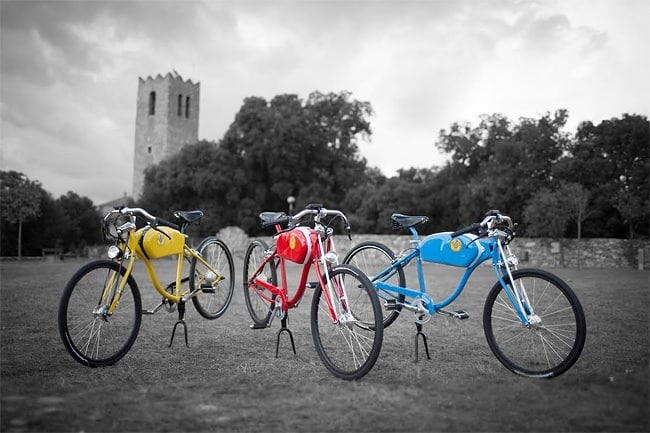
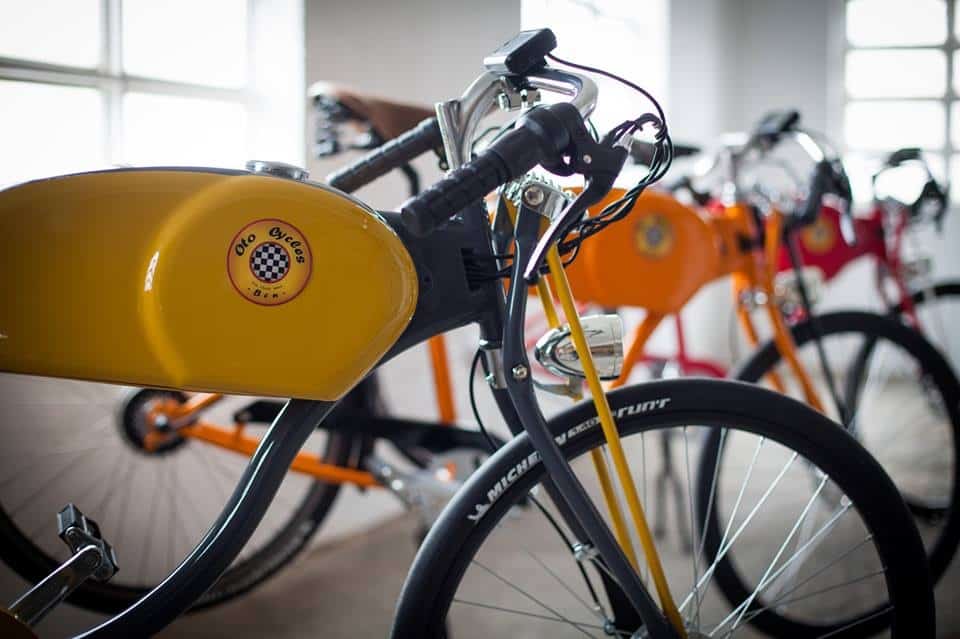

There is a particular kind of object that flea market hunters and vintage collectors recognise immediately — something that looks unmistakably old but hums with quiet, contemporary purpose. When Oto Cycles emerged from Barcelona in 2014, the family-run engineering project behind it was chasing exactly that feeling: the silhouette of a 1950s motorcycle, rebuilt around an electric drivetrain and hand-assembled to order. Each bike was different. That alone would make it interesting to anyone who has spent a Saturday morning arguing over the provenance of a café racer fuel tank.
A Barcelona Electric Bike Built from 1950s Motorcycle Nostalgia
The Oto Cycles Electro Bike arrived at a moment when the retro-electric category was still finding its shape. American marque Derringer Cycles had drawn serious collector attention a couple of years earlier with its own low-slung, nostalgia-forward electric bicycle. Oto Cycles was working a closely related seam — but with a distinctly European sensibility, a Barcelona address, and a customisation system that made every frame a considered individual object rather than a production-line unit. At launch, the starting price was approximately €2,850 for a base configuration. That figure is now well over a decade old and should not be treated as current.
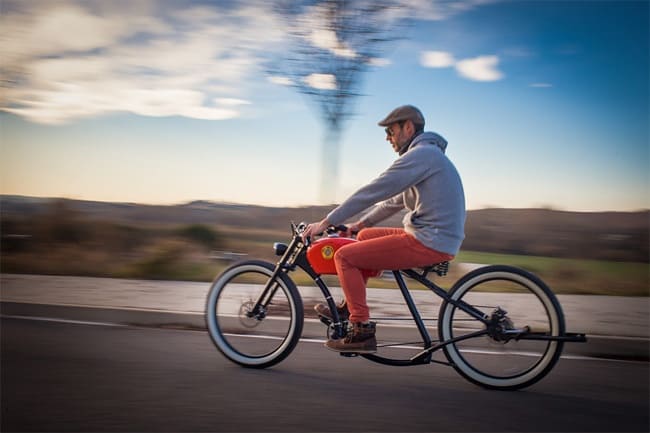
Two motor options were available at launch: a 250W rear hub brushless motor as standard, with a 500W alternative for riders wanting more urgency off the line. Both drew from a 36V Samsung NCM cell battery, with a claimed range of 50–70 km per charge and a stated charge time of around four hours. The top speed sat at approximately 25–32 km/h depending on configuration — within EU electric bicycle limits, and enough for genuine urban use rather than display-cabinet ownership.
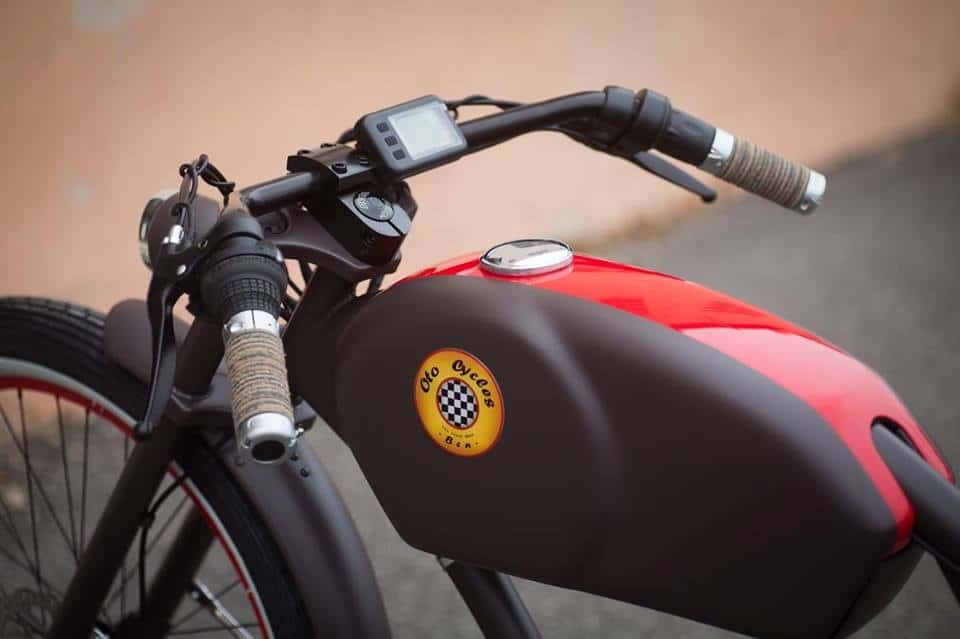
Oto Cycles held vehicle manufacturer registration and Applus certification at launch, confirming EU compliance as it stood in 2014. A Shimano Revoshift six-speed gear system, a five-level LCD display, pedal-assist sensor and a half twist-grip throttle completed the specification. The brand also offered a “Start and Go” function that pushed the bike from a standstill to 6 km/h without pedalling — the kind of small, considered convenience that signals a product designed by people who actually ride.
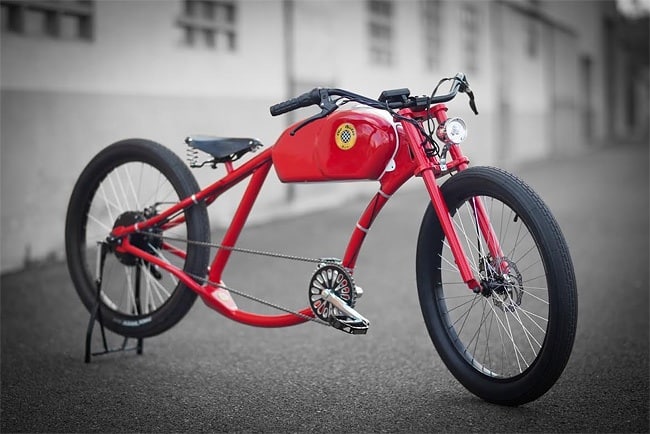
Colour mattered as much as mechanics. Oto Cycles offered 210 base colours and claimed up to 44,100 possible combinations when saddles, tyres and trim were factored in. For a collector used to hunting a single correct shade of original lacquer on a 1960s Vespa, that level of specificity reads less like marketing and more like a shared obsession.
Retro Design as a Collector’s Language
The 1950s motorcycle silhouette that shaped the Oto Cycles frame is not an arbitrary reference. It pulls from a specific era of European two-wheel design — low-slung tanks, rounded fenders, chrome detailing, the kind of proportions that read as complete objects rather than assemblies of components. It is the same visual grammar that makes a vintage Lambretta or an early Ducati Cucciolo worth restoring decades after the last spare part went out of production. Oto Cycles did not reproduce that look ironically. The Barcelona team, an engineers’ family by background, treated it as the correct solution to the problem of making an electric bicycle worth wanting.
Hand-assembly reinforced that logic. When no two frames leave a workshop identically configured, the object acquires a kind of provenance from the moment it is built — the same quality that makes a hand-finished object from any era more interesting on the secondary market than its mass-produced contemporary. The 44,100 possible colour and component combinations Oto Cycles offered at launch were not simply a marketing exercise. They functioned as a serialisation system, making each bike traceable back to a specific set of decisions made by a specific owner at a specific moment. Collectors who have spent time with vintage objects — debating whether a Vespa’s original cellulose matches the factory card, or whether a café racer’s seat was a period modification — will recognise that logic immediately.
The timing placed Oto Cycles inside a small but editorially significant wave. Derringer Cycles in the United States had already demonstrated that a retro-framed electric bicycle could attract genuine collector and design-press attention rather than being dismissed as a novelty. The appetite was there. What Oto Cycles added was a European workshop sensibility — the kind associated with small-batch production, artisan finish and the understanding that a considered object takes longer to make than a catalogued one. That combination of 1950s visual reference, hand-build process and electric utility positioned the bike at an intersection that the vintage market has always found compelling: the genuinely old-looking thing that actually works.
What It Means for Buyers and the Secondhand Market
The practical question for anyone arriving at Oto Cycles from a collector or vintage-market perspective is a familiar one: what happens to a hand-built, deeply customised object once it leaves its first owner? The answer, in this case, is more interesting than it is for most electric bikes.
Mass-produced electric bicycles age into commodity. A machine built in a short run, configured to a specific owner’s choices, and finished by hand ages into something closer to a collectable. The 44,100 possible colour and component combinations Oto Cycles offered at launch mean that any example on the secondary market is effectively unique — not in the marketing sense, but in the literal sense that no documented production run exists to tell you how many others share its specification. For a buyer sourcing one now, that ambiguity cuts both ways: provenance is harder to establish, but so is the argument that any other example is equivalent.
The 1950s motorcycle silhouette is durable in resale terms precisely because it does not date to a passing trend. The visual reference predates the current wave of retro-electric design by decades, which means an Oto Cycles frame does not read as dated in the way that, say, a mid-2010s attempt at futurist styling already does. Buyers at flea markets and vintage vehicle auctions have long understood that objects borrowing from a genuinely stable aesthetic canon hold their visual appeal longer than those designed to look contemporary. That principle applies here.

Condition assessment on the secondhand market would follow the logic of any hand-finished vintage-adjacent object: examine the frame finish for touch-up repairs that don’t match the original colour choice, check whether custom components — saddle, tyres, trim — are original to the build or replacements, and establish whether the battery has been serviced or substituted. Battery technology from this era has a finite cycle life; the Samsung NCM cells specified at launch were rated for over 1,500 charge cycles, but any example more than a few years old is likely carrying a replacement pack, which affects both range claims and value. The electric drivetrain itself — a brushless rear hub motor — is mechanically straightforward and well-supported in the broader e-bike repair ecosystem, which works in a buyer’s favour.
Whether Oto Cycles itself remains active is a question that shapes the market differently depending on the answer. If the brand is still producing, early examples carry the added interest of representing a pre-scale iteration of the workshop’s output — the hand-built provenance is clearest in the earliest production. If the brand has since closed, the secondary market becomes the only market, and the logic shifts fully toward the kind of collector calculus applied to any small-batch vehicle: rarity, originality, documentation. Either way, the object that Oto Cycles built in Barcelona — retro-framed, hand-assembled, obsessively configurable — is precisely the kind of thing that the vintage and antiques market tends to find again, eventually, and value more clearly the second time around.
A Note for Collectors and Curious Buyers
Small-batch objects built around a strong design idea tend to age interestingly — and the Oto Cycles Electro Bike is that kind of object. Hand-assembled in Barcelona, finished to order, and rooted in a very specific visual moment when retro aesthetics and electric mobility briefly converged, it belongs to a category the flea market world understands well: the niche production run that most people ignored at the time and a smaller number now quietly seek out. If you encounter one, treat it as you would any hand-built vehicle of uncertain provenance: inspect the battery, confirm the motor configuration, and ask what’s original. The collector appeal is real; the due diligence is the price of entry.
Technical specifications
- Autonomy 50 to 70 km ( 30 to 44 miles )
- Speed 25 to 32 km/h( 16 to 22 miles/h )
- Display LCD with 5 assistance levels
- PAS sensor
- Rear Hub Brushless motor 250W with Hall Sensor, controller 15 A with half twist throttle. Optional 500 W motor and 20A controller.
- Front drum brake Sturmey Archer 70 mm, rear V brake. Optional rear disk brake.
- Tank manufactured in fiberglass reinforced unsaturated polyester resin. Classic motorcycle tank cap.
- Springer fork 26-inch model OtoK, double crown fork 24 or 26-inch model OtoR. LED’s front light, Brooks saddle, and components.
- 36V 10.4 A NCM Samsumg Cells battery (more than 1500 charging cycles)
Frequently Asked Questions
Is Oto Cycles still making bikes?
Oto Cycles launched in Barcelona in 2014 and received significant attention as a design-led small-batch manufacturer. Whether the brand is currently active and accepting orders is not confirmed here — brand status, pricing, and the official Oto Cycles Facebook page should all be verified independently before making any purchase decisions.
What should I check when buying a used Oto Cycles bike?
Battery condition is the first priority. The Samsung NCM cells specified at launch were rated for over 1,500 charge cycles, meaning older examples are likely running replacement packs — which affects range and resale value. Beyond that, confirm whether key components such as the saddle, tyres, fork, and fiberglass tank are original to the build, and ask for any documentation of service history. The brushless rear hub motor is mechanically simple and well-supported across the wider e-bike repair ecosystem, so drivetrain issues are generally manageable; battery and originality are the variables that matter most to value.