


On 16 May 2026, people queued through the night outside Swatch boutiques across the world. In Tokyo’s Ginza, the line hit 300 before dawn. In Miami, more than 3,000 flooded a mall. In London, the atmosphere at Battersea Power Station was hostile — barging, heckling, stores closing before they opened. In France, boutiques stayed shuttered under police escort. In India, Mumbai and New Delhi launches were cancelled outright. At a Long Island mall, police deployed pepper spray to manage the crowd. Resale listings appeared within hours at £16,000 — over 50 times retail. The watch at the centre of it all retailed for CHF 350. It was a pocket watch.
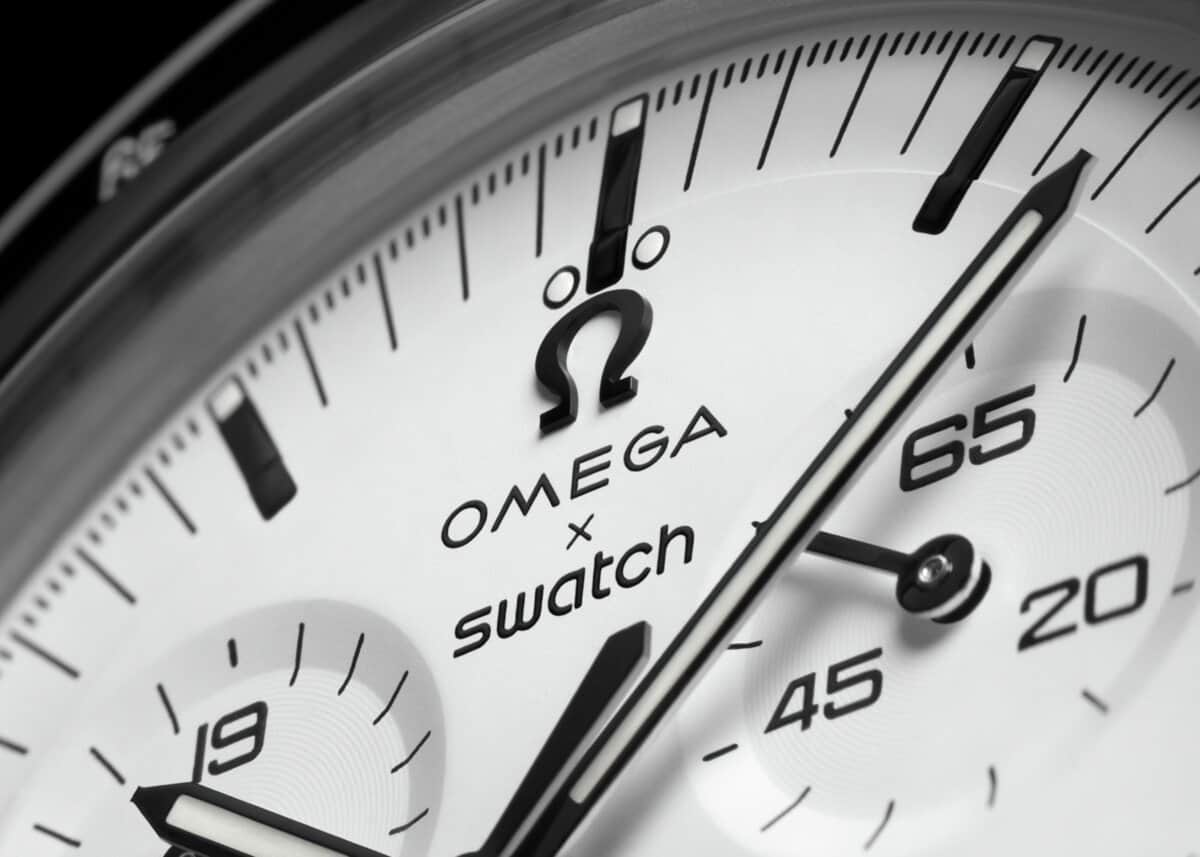
None of this was entirely new. On 26 March 2022, Swatch had triggered almost identical scenes with a CHF 250 bioceramic quartz watch — not a limited-edition piece from a Geneva atelier, just a watch gone from most stores within hours, listing on eBay for three and four times retail by evening. That was the MoonSwatch. What the Royal Pop confirms, four years on, is that Swatch luxury watch collaborations have become a repeatable formula — and that the appetite for them, if anything, is growing.
One Group, Many Faces
To understand why Swatch keeps doing this, you need to understand what Swatch Group actually is. From the outside, Swatch looks like a cheerful plastic watch brand — colourful, disposable-priced, seasonal. Inside the group structure, it shares a parent company with Omega, Longines, Blancpain, Breguet, Harry Winston and a string of other marques that collectively represent some of the most valuable watch brands on earth. Swatch is not a cheap cousin tolerated at the luxury table. It is the group’s volume engine, its retail network and — increasingly — its most effective marketing department.
That structure matters because it makes the collaborations almost frictionless to execute. When Swatch and Omega co-developed the MoonSwatch, no licensing negotiation with an outside party was required. No brand equity was handed to a competitor. The dial design, the Speedmaster heritage, the moonphase imagery — all of it lives within the same corporate house. What looked to the outside world like a bold creative partnership was, internally, closer to an interdepartmental project.
This is the first thing collectors should understand about Swatch luxury watch collaborations: they are not conventional brand partnerships. They are a vertically integrated group using its own intellectual property to create demand at multiple price points simultaneously.
The Swatch side gains cultural relevance and a reason for people to queue outside stores again — something that had become genuinely difficult to engineer in an era of online drops and algorithm-driven hype. The luxury side gains something harder to manufacture: exposure to a younger, broader audience that may never have walked into an Omega boutique unprompted. A twenty-something who camped outside a Swatch store for a MoonSwatch Mission to the Moon has now handled Speedmaster design language. Planted a seed.
Whether that seed grows into a future Omega sale is unproven — and Swatch Group has not published data to that effect. But the commercial logic is coherent: MoonSwatch made Speedmaster design language visible to buyers who might never have approached an Omega boutique, while leaving the full-price Speedmaster untouched.
Three Collabs, Three Different Bets
The MoonSwatch was the proof of concept. Blancpain × Swatch — the Scuba Fifty Fathoms released in 2023 — was the test of whether the formula could travel upmarket in feel while keeping the accessible price point. The Royal Pop, the collaboration with Royal Oak design lineage, pushed into different aesthetic territory again. Each collab is doing something slightly different, even if the commercial mechanics look similar from the outside.
The MoonSwatch worked partly because the Speedmaster is one of the most mythologised watches in existence. Moon landings, astronauts, half a century of cultural weight — Swatch borrowed all of it for CHF 250. The queue was not just about the watch. It was about owning a piece of a story that normally costs several thousand francs to enter.
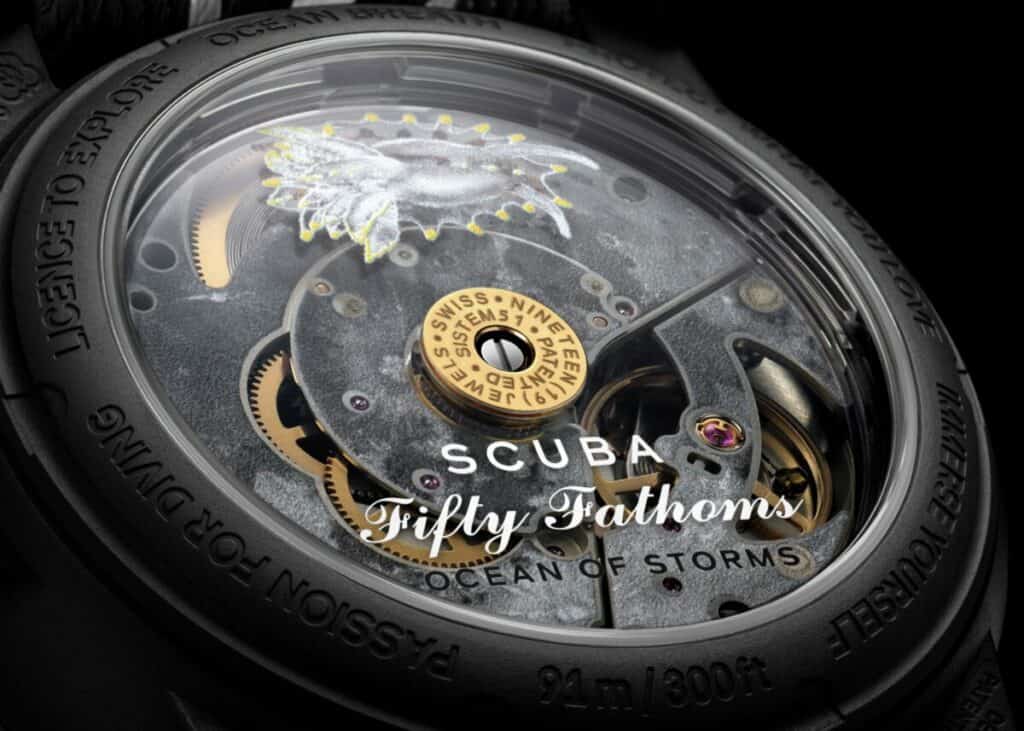
Blancpain is a different proposition. Less universally recognised than Omega, more specialist — a diver’s brand with serious horological credibility and a devoted niche following. The Scuba Fifty Fathoms collab leaned hard into that identity: ocean conservation messaging, ocean-derived bioceramic colourways, a cause woven into the product rather than bolted on. Whether that resonated beyond the existing Blancpain audience or genuinely recruited new admirers is a fair question. The secondhand prices — firmer than the MoonSwatch’s post-peak corrections, if still below launch-day highs — suggest a more measured but steadier collector interest.
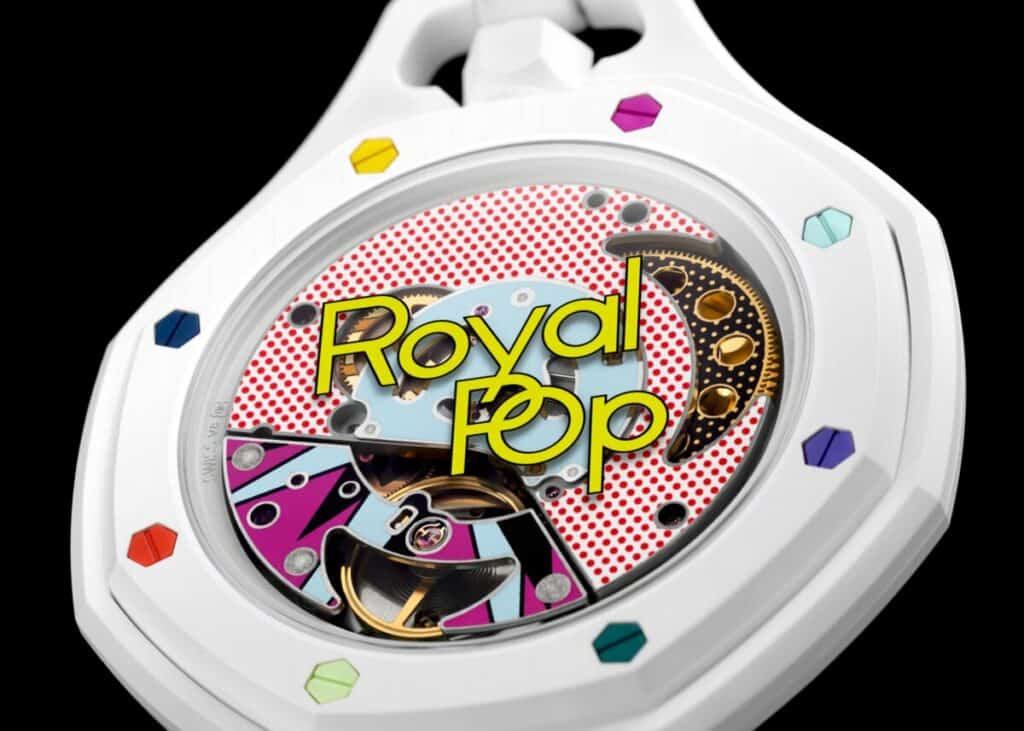
The Audemars Piguet × Swatch Royal Pop sits differently again. Where the MoonSwatch borrowed wearable mythology and the Blancpain collab borrowed conservation credibility, the Royal Pop borrows design language associated with one of watchmaking’s great aesthetic disruptions — Audemars Piguet Royal Oak’s integrated bracelet and octagonal bezel, originally conceived by Gérald Genta in 1972. Translating that into Swatch’s material register is a bolder formal experiment than either predecessor.
Taken together, the three releases show a group that is not simply repeating itself. Each collaboration picks a different strand of horological heritage — space exploration, ocean diving, design history — and asks whether Swatch’s audience will follow it there. So far, the answer has been yes. The more interesting question is how many times you can ask it before the answer changes.
The Secondhand Market Reality
Collectible value and manufactured scarcity are not the same thing, even when they look identical on launch day.
The MoonSwatch’s first weeks on the secondhand market were spectacular in a way that was always going to be temporary. Flippers who queued in March 2022 and listed the same evening made real money. But a watch that was never mechanically scarce — Swatch’s industrial production capacity is not that of a small Geneva atelier — was always going to find its natural price ceiling once the frenzy cooled. Within twelve months, resale premiums had compressed significantly in most colourways. A handful of Mission to variants held firmer. The rest settled somewhere above retail but well below the peak, which is roughly where they remain.
That pattern is neither surprising nor damning. It mirrors what happens to almost every limited-release object that combines genuine cultural heat with mass production capability — the initial premium is real, the sustained premium is selective. What matters for collectors is understanding which category their piece sits in before they buy.
Manufactured scarcity and genuine scarcity are not the same thing. A launch queue can create a premium for a few weeks; only discontinuation, condition, cultural memory and real collector demand can sustain one over years.
The Blancpain × Swatch Scuba Fifty Fathoms tells a somewhat different story. The niche is smaller, the audience is more specialist, and the conservation angle gives the object a framework of meaning that doesn’t evaporate when the queue disperses. Secondhand prices appear to have held more steadily than the MoonSwatch’s wider range — but this is a thinner market with fewer transactions, so individual sales carry more weight than they would in a liquid category. Treat any headline resale figure with appropriate scepticism.
For the Royal Pop, the secondhand picture is still forming. Design-led pieces take longer to find their resale floor because their audience is partly in the watch world and partly in fashion and design — two communities that do not always shop the same secondary platforms.
The broader point is this: if you are buying any of these collaborations as an investment, you are speculating. If you are buying because you want to wear a well-designed object that carries genuine horological heritage at a fraction of what that heritage normally costs to own, the value proposition is more durable. The collectors who seem happiest with their MoonSwatches two years on are the ones who treated them as watches rather than futures contracts.
That is a useful frame for anyone approaching Swatch’s collaboration formula now, when the novelty has settled and the secondhand market has had time to reach something closer to honesty. It also connects to a larger question the vintage and antiques market asks of every new category: does this object have the cultural staying power to become genuinely collectible, or does it age into a curiosity? See also: antiques of the future and the most valuable vintage collectibles — the criteria that separate the two categories apply here as much as anywhere.
What CHF 350 Buys You on the Vintage Market
The Royal Pop retails at CHF 350 (around $445). That is also, roughly, the budget at which the vintage watch market starts getting genuinely interesting. Not in a consolation-prize way — in a “this is actually a better watch” way, depending on what you care about.
A Longines Grand Prize or Conquest automatic from the early 1960s can be found on Chrono24 or at a well-stocked brocante for CHF 280–420 (around $355–535) in honest wearing condition — and occasionally under $400 for unserviced examples. These are Swiss-made, in-house movements: Longines built their own calibres at a time when vertical integration was the norm, not a marketing claim. The Grand Prize in particular is a slim, elegant object that wears better than its price suggests it should. It is not a pocket watch on a lanyard. It is a watch. For more on what makes it worth hunting, Worn & Wound’s guide to the Grand Prize is a useful starting point.
A Tissot Seastar or Visodate PR 516 automatic from the 1960s–70s sits comfortably in the CHF 150–320 range (around $190–405) depending on condition and dial — well within Royal Pop territory, with room to spare for a strap. Tissot is, ironically, another Swatch Group company, which makes buying a vintage Tissot at a flea market an arguably purer encounter with the same Swiss manufacturing heritage the Royal Pop is referencing. The PR 516, designed with a motorsport sensibility, wears particularly well on a NATO strap.
A Yema Superman or Rallygraf from the 1970s–80s, found at a French vide-grenier or on Catawiki, can land in the CHF 150–280 range (around $190–355). French watches of this era are chronically undervalued relative to their Swiss counterparts — the Rallygraf’s panda-dial layout was worn by Mario Andretti, and the Superman was one of the first serious dive watches produced outside Switzerland. The vintage mechanical versions with Valjoux movements are another matter entirely — they trade at $1,500 and up — but the period quartz and manual-wind pieces are collector material that most buyers walk past at flea markets.
None of this is an argument against buying a Royal Pop. It is an argument for knowing what CHF 350 means in the wider market before you spend it. The Royal Pop offers something a vintage Longines cannot: newness, a story that is still forming, and the particular pleasure of having been there at the beginning. The vintage watch offers something the Royal Pop cannot: decades of proven survival, a movement with a documented service history, and the knowledge that someone else already decided it
was worth keeping. Both are legitimate reasons to buy a watch. They are just different reasons.
Is the Swatch Collaboration Formula Wearing Thin?
Every successful creative strategy contains the seed of its own exhaustion. The question worth asking in 2026 — two years after the MoonSwatch queues, one year after Scuba Fifty Fathoms, and with The Audemars Piguet × Swatch Royal Pop still finding its audience — is whether Swatch has a repeatable model or a trick it has already played.
The honest answer is: probably both, depending on what the next collaboration is.
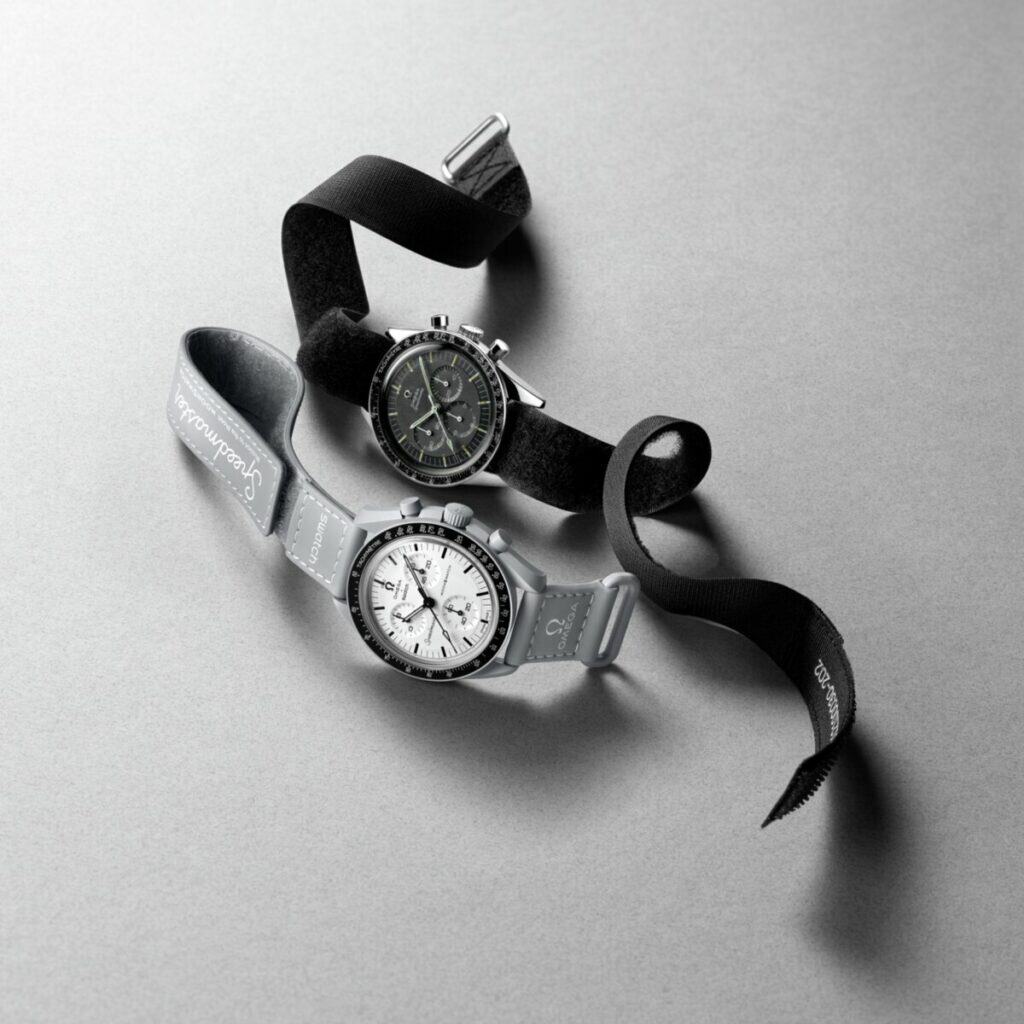
The MoonSwatch worked for reasons that were structural, not just cultural. It attached itself to one of the most recognisable watch designs in history — the Omega Speedmaster, the watch worn on the moon — and made that heritage available for CHF 250. That is not a gimmick. That is a genuine value transfer, and it explains why so many buyers kept theirs rather than flipping them. The object carries a real story, even in bioceramic.
The Blancpain × Swatch worked for a narrower but arguably more committed audience. Dive watch collectors are serious people. Many of them already knew what the Fifty Fathoms was before Swatch came calling, which meant the collaboration didn’t need to educate its audience — it just needed to offer them something they couldn’t otherwise afford. It did that, and the ocean conservation framing gave buyers a reason to feel good about the purchase that had nothing to do with resale value.
The risk Swatch runs is not that one collaboration fails. It’s that the collaborations become predictable enough to be ignored. When every year brings a new pairing, each with its own queues-and-eBay launch week, the cultural heat that made MoonSwatch feel like an event starts to resemble a marketing calendar. Collectors and watch enthusiasts are not unsophisticated — they notice when novelty becomes routine.
There are a few things that could keep the formula fresh. Genuine design risk — as Royal Pop at least attempts — is one. A collaboration with one of the group’s more unexpected marques would be another; Breguet, for instance, carries a historical weight that would create a very different conversation than Omega’s space-age cool. A meaningful shift in distribution — away from the queue-and-flip model toward something that rewards actual buyers — would also help restore some of the goodwill that was lost in 2022 when dedicated collectors found themselves shut out by resellers.
None of that is guaranteed. But Swatch Group’s position gives it options that no external collaboration could replicate. The intellectual property is already in-house. The production infrastructure exists. The retail network spans price points from CHF 50 to CHF 50,000. If the creative ambition keeps pace with the commercial machinery, there is no obvious reason why the collaboration model has to run out of road.
What it cannot do is keep recycling the same emotional trigger — the democratised luxury object, the launch-day queue, the eBay premium — without eventually diminishing what made it feel worthwhile in the first place. The secondhand market will be the most reliable signal. If buyers continue treating these watches as objects worth keeping, the formula has legs. If the resale floor keeps dropping toward retail a few months post-launch, the market is telling Swatch something it would be wise to hear.
What This Means If You’re Buying One
Strip away the brand strategy and the market commentary, and there is a practical question underneath all of it: should you actually buy one of these watches, and if so, which one?

The answer depends almost entirely on why you want it.
If you are buying for resale, the window has almost certainly closed on the MoonSwatch. The first six months post-launch were the peak. Anyone who queued on 26 March 2022 and listed the same day did well. The buyers who followed at eBay premiums, expecting further appreciation, largely did not. Resale floors have settled considerably since launch week, and the ongoing availability of new colourways has kept the ceiling low. This is not a criticism of the object — it is just how markets work when supply keeps arriving.
The Blancpain × Swatch is a more interesting case for a certain type of collector. Dive watches have a proven secondhand floor, and the Fifty Fathoms heritage is not decorative — it is historically grounded in a way that tends to hold value in the minds of enthusiasts. If the ocean conservation angle resonates with you beyond the marketing, and if you would wear it in the water rather than keep it in a display case, this is the collaboration with the clearest claim to being a watch first and a collectible second. That matters more than it might seem. Objects that get used tend to develop a relationship with their owners that purely speculative purchases never do.
The Audemars Piguet × Swatch Royal Pop is the one to buy if the object genuinely excites you visually and you are not attaching any financial expectation to it. Buy it because it is unusual. Do not buy it because it might be worth more two years from now.
There is a broader principle worth keeping in mind, and it applies to Swatch collabs and to most of the collectibles market more generally: the pieces that hold long-term interest are the ones that carry a story independent of their launch hype. The MoonSwatch can point to the Apollo programme. The Scuba Fifty Fathoms can point to sixty years of professional diving history. The question to ask before any purchase in this category is whether the object has something to say once the queue has dispersed and the eBay listings have normalised. If the honest answer is no, that is useful information.
For a wider view of how modern reissues and collabs compare to the genuinely vintage pieces they reference, the guide to retro-modern watches is a useful parallel read. And if you are thinking seriously about watches as long-term collectibles rather than short-cycle purchases, the editorial on antiques of the future addresses which contemporary objects are most likely to matter in twenty years — and why most of them won’t be the ones everyone queued for.
Finding Swatch collaborations at the flea market
MoonSwatches are already showing up at flea markets and brocantes — particularly in London, Paris and Amsterdam, where the secondhand market moves fast and the hype cycle burns through stock quickly. If you find one at a stall, a few things are worth checking before buying. First, the bioceramic case: it is harder than steel and should show minimal scratching even on a worn example — deep gouges are a red flag for a fake or a heavily mishandled piece. Second, the movement: it should run, and the sweep of the seconds hand should be smooth rather than steppy. Third, the crown: it should screw down cleanly with no wobble. The Mission designation should be clearly printed on the dial and match the caseback engraving.
Blancpain × Swatch pieces are rarer in the wild — the audience was smaller and more specialist, and fewer ended up in the churn of the general secondhand market. When they do appear, they tend to price higher than MoonSwatches at equivalent condition, which reflects the narrower supply rather than necessarily a stronger collector consensus. The ocean-coloured bioceramic shows dirt less than the lighter Mission colourways, so dial and bezel condition is worth scrutinising carefully.
Royal Pop is too recent to have reached the flea market circuit in any numbers — but it will. Pocket watches, in particular, have a history of migrating quickly from retail to the secondary market because they are easier to carry, easier to lose interest in, and easier to slip into a bric-a-brac box at a vide-grenier three years after purchase. When Royal Pops start appearing at stalls — and they will — the key thing to verify is the movement: the hand-wound SISTEM51 should have a satisfying resistance when winding and a power reserve indicator visible through the caseback. A dead or intermittent movement at flea market prices is not necessarily a deal-breaker, but factor in a service cost before committing.
The Swatch collaboration model is genuinely interesting. It has done things no conventional licensed partnership could do, and it has introduced a generation of buyers to watch heritage they might never have encountered otherwise. Whether it produces objects worth owning depends on the individual piece, your reasons for buying it, and — more than anything — whether you find yourself still reaching for it in five years. That is a harder question to answer than any secondhand price guide. It is also the only one that really matters.
FAQ: Swatch Luxury Watch Collaborations
What is the Audemars Piguet × Swatch Royal Pop?
The Royal Pop is a collection of eight bioceramic pocket watches launched on 16 May 2026, designed in collaboration between Swatch and Audemars Piguet. Each piece draws on the Royal Oak’s signature design language — octagonal bezel, eight hexagonal screws, Petite Tapisserie dial pattern — reinterpreted in Swatch’s bioceramic material and powered by a new hand-wound version of the SISTEM51 movement, offering over 90 hours of power reserve. The collection comes in two case formats: Lépine (open-face, hours and minutes) at CHF 350, and Savonnette (hinged cover, small seconds) at CHF 375. Unlike a traditional wristwatch, the Royal Pop is designed to be worn on a lanyard, clipped to a bag or converted to wristwear — closer to a wearable collectible than a conventional timepiece. It is available exclusively through selected Swatch boutiques, one piece per customer per day, and is not a one-day limited edition — Swatch confirmed the collection will remain on sale for several months.
Is the MoonSwatch a limited edition?
Not in the traditional sense. The original MoonSwatch collection launched in eleven variants and has remained available through Swatch boutiques, with additional colourways and special releases added over time. Launch-day scarcity came mostly from boutique-only distribution, high demand and purchase limits rather than a numbered production run. That distinction matters for collectors, because permanent availability tends to limit long-term resale premiums.
Does the MoonSwatch hold its value?
It depends when and where it was bought. Buyers who paid retail are in a very different position from those who paid launch-week secondary-market premiums. The broader pattern is clear enough: the first resale spike cooled as supply improved, and most standard MoonSwatch models no longer behave like scarce limited editions. Current resale figures should be checked before publication, especially if you mention exact prices.
Are Swatch collaborations made by Swatch or the partner brand?
The watches are made and distributed by Swatch, using Swatch materials, movements and retail channels. The partner brand contributes design language, heritage and intellectual property. With MoonSwatch and Blancpain × Swatch, that arrangement was essentially intra-group strategy — both Omega and Blancpain sit inside Swatch Group, so those collaborations were less external partnerships than a parent company leveraging its own assets. Royal Pop is structurally different. Audemars Piguet is fully independent — no ownership ties to Swatch Group — making this the first genuine cross-group collaboration in the series, and the first time Swatch has had to negotiate creative and commercial terms with a house that shares no corporate parent. AP has also structured its financial participation unusually: 100% of its proceeds from the collection fund watchmaking preservation and apprenticeship initiatives, rather than flowing to the bottom line.
Is the Blancpain × Swatch worth buying for collectors?
It is probably more interesting as a watch to wear than as a pure investment. The Scuba Fifty Fathoms has a stronger enthusiast angle than the MoonSwatch because it uses dive-watch heritage, a more specialised design language and an automatic SISTEM51 movement. That does not guarantee appreciation, but it gives the object more substance than a simple colourway-driven release. Buy it because the design and story appeal to you, not because you expect a guaranteed resale premium.
Which Swatch collaboration is most valuable on the secondhand market?
Of the three, the Blancpain × Swatch Scuba Fifty Fathoms has held up best among serious collectors — the automatic movement, the dive-watch heritage and the more specialised design language give it a stronger floor than a colourway-driven release. Standard MoonSwatch models have normalised considerably since launch: the spike was real, but most variants are no longer trading at the premiums that made early eBay listings look extraordinary. The Royal Pop launched at CHF 350–375, flipped for as much as £16,000 on launch day, and will almost certainly follow the same cooling curve — the question is how far and how fast. As a pocket watch aimed partly at a streetwear and accessory audience rather than a traditional watch collector, its long-term secondhand behaviour is genuinely harder to predict. Current resale prices should be checked before citing any figures.
USD equivalents calculated at approximately $1.27 per CHF, May 2026. Exchange rates fluctuate.