

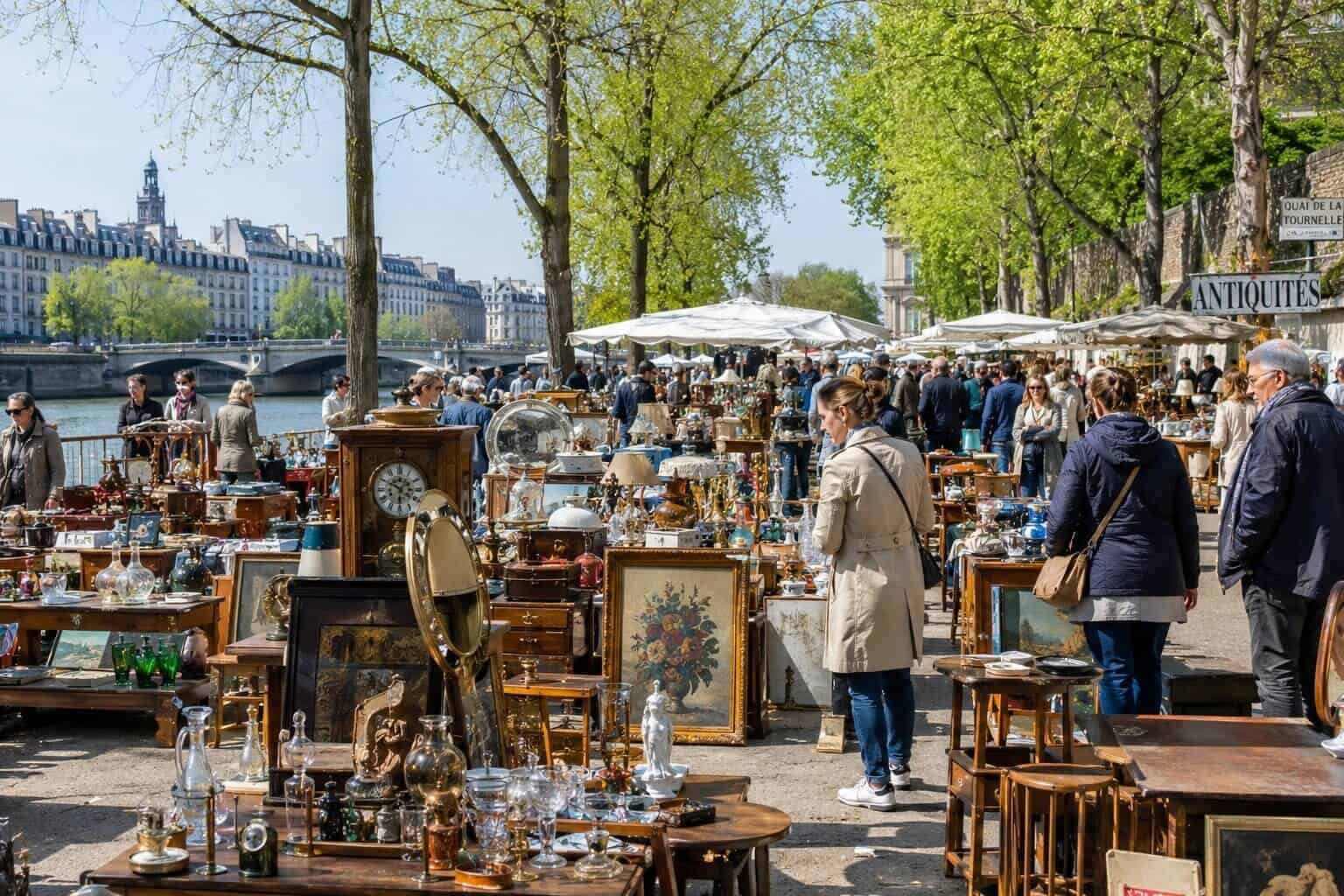

Many of the best European antique markets only run two or three times a year — and a disproportionate number of those dates fall between March and June. That concentration is what makes spring the most rewarding season for collectors, dealers and first-time fair-goers alike. When a market runs infrequently, vendors arrive with better stock, buyers come from further afield, and the finds are harder to replicate at a weekend car boot. The 15 markets below were chosen for exactly that reason: rarity and quality of goods. Each runs no more than a handful of times annually, and each draws a calibre of vendor — or a volume of stock — that sets it apart from the weekly or monthly alternatives.
The strongest clusters are in France, the United Kingdom, Italy, Germany and Belgium. All practical details — vendor counts, occurrence patterns — were drawn from available source material. Confirm dates and hours on official websites before travelling; spring schedules shift year to year.
1. Foire de Chatou (France)
The Foire de Chatou is one of France’s most significant antique fairs by both scale and range. Twice a year it fills the Mail des Impressionnistes — a riverside site in Chatou, west of Paris — with over 700 professional vendors working across a genuinely wide spread of disciplines: classical decorative arts, twentieth-century design, furniture, jewellery and objects that resist easy categorisation. That breadth is part of what draws a serious buying crowd; dealers and private collectors attend alongside general visitors, and the atmosphere reflects that mix.
The fair runs for around nine days per edition, which is long enough to warrant more than a single visit if you are within reach of Paris. The spring edition takes place in March. A gastronomic offer runs alongside the antiques — the Foire de Chatou has a longstanding reputation as a fair where eating well is considered part of the programme, not an afterthought.
Vendors: 700+ | Occurrence: Twice a year (spring and autumn) | Read the full review: Foire de Chatou on Fleamapket
2. Ravnsborggades Loppemarked (Denmark)
Ravnsborggade runs through the heart of Nørrebro — one of Copenhagen’s densest and most characterful neighbourhoods — and the street market that takes its name from the road fits that setting precisely. It is smaller and less frequent than the city’s regular flea markets, but that infrequency is part of what gives it its character. Because the 250 vendors are not turning up every weekend, the stock tends to reflect deliberate curation rather than perpetual clearance. Private sellers mix with professional dealers, and the range is correspondingly varied: furniture, clothing, ceramics, vinyl, tools and the kind of miscellany that makes a proper rummage worthwhile.
The market runs on Sundays, four times a year. For buyers who find Copenhagen’s permanent and monthly markets too predictable, Ravnsborggade offers a more uneven — and more interesting — proposition. Arrive early; the better pieces move quickly, and the crowd thickens as the morning progresses.
Vendors: 250 | Occurrence: Four times a year on Sunday: 10:00–16:00
Directions: Ravnsborggade, Nørrebro, Copenhagen, 2200 Denmark
Read the full review: Ravnsborggades Loppemarked on Fleamapket
3. Mercatino Antiquariato Campo San Maurizio (Italy)
Campo San Maurizio sits in the San Marco sestiere, a short walk from Campo Santo Stefano — quiet enough that the market stalls, when they appear, genuinely transform the square. The Mercatino Antiquariato Campo San Maurizio specialises in silverware, Murano glass, ceramics and decorative homeware. The selection skews older and more formal than the average Italian flea market; this is a place for considered buying, not casual rummaging. It runs five times a year, which keeps the vendor quality consistent.
Around 200 vendors occupy the campo on market days, and the footprint of the square means stalls are densely arranged — there is no obvious circuit, so it rewards a second pass. The spring dates, falling in April and May, coincide with a period when Venice is busy but not yet at peak-summer capacity. That balance makes the market easier to navigate than it would be in high season, and accommodation options in the surrounding sestieri are more available than they will be from July onwards.
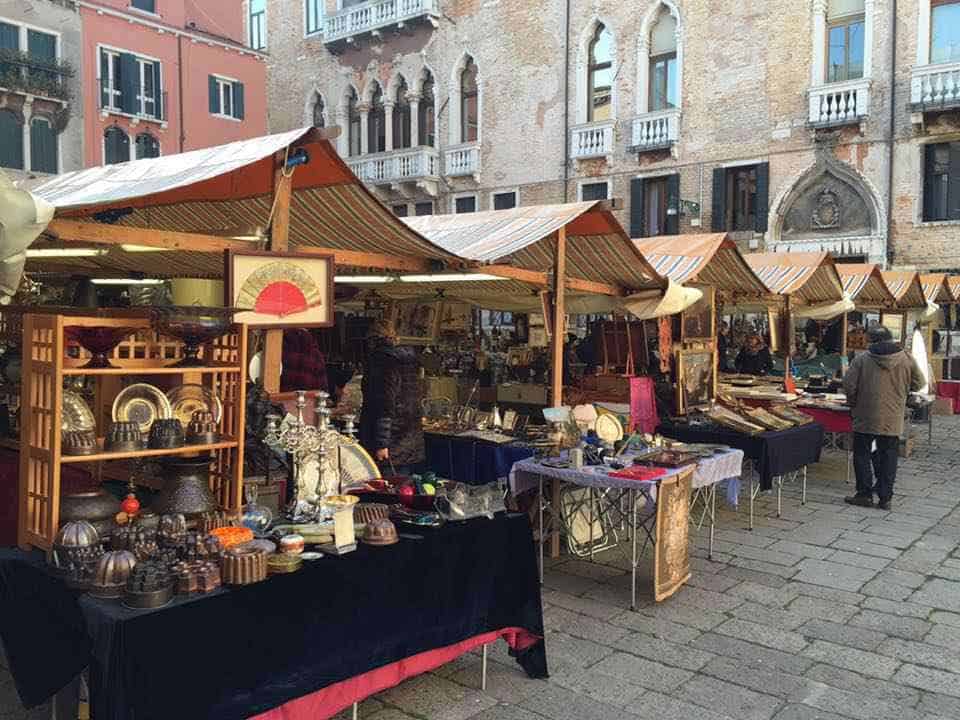
Vendors: 200 | Occurrence: 5 times a year in April, May, September, October and December: 09:00–19:00
Directions: Campo San Maurizio, 2603, San Marco, Venice, 30124 Italy
Read the full review: Mercatino Antiquariato Campo San Maurizio on Fleamapket
Plan Your Trip: Book Your Stay Near Campo San Maurizio
4. I Grandi Mercati dell’Antiquariato e del Collezionismo di Cherasco (Italy)
Cherasco is a small hilltop town in the Langhe district of Piedmont, better known for snails and chocolate than for antiques — which makes the scale of its market genuinely surprising. The Grandi Mercati di Cherasco has been running since 1917, and on market days the event stretches across roughly three miles of pavement through the historic centre. With over 600 vendors, it is one of the largest antique markets in northern Italy by vendor count, and the format — open-air, spread across multiple streets — rewards methodical walking rather than a quick browse.
The stock tends toward furniture, rural antiques, ceramics and collectables, with a strong presence of dealers from the wider Piedmont and Lombardy regions. Because Cherasco itself is compact, the market effectively takes over the town, which gives the event a density that larger purpose-built fairgrounds rarely achieve. The spring dates — typically falling on Sundays in April, May and June — offer the most comfortable visiting conditions before summer heat sets in across the Po Valley.
Vendors: 600 | Occurrence: Up to 5 times a year, usually on the 1st or 2nd Sunday in April, May, June, October and December: 09:00–19:00
Directions: Cherasco, 12062 Italy
Read the full review: Cherasco Antique Market on Fleamapket
✈️ Plan Your Trip: Book Your Stay in Cherasco, Italy
5. Déballage Marchand d’Avignon (France)
The Déballage Marchand d’Avignon — formally known as the Journées Professionnelles Internationales de l’Antiquité et de la Brocante — is primarily a trade event, which sets it apart from most of the markets on this list. Held in Avignon, it draws professional buyers and dealers from across Europe who come specifically to source stock, negotiate in volume and move serious pieces. The atmosphere is transactional in the best sense: less browsing, more dealing.
That professional orientation does not exclude informed private buyers, but it does shape what you find here. The goods tend toward higher-value antiques and brocante rather than the mixed household clearance material common at general flea markets. Avignon’s position in the Vaucluse — within easy reach of the Isle-sur-la-Sorgue antiques corridor — means that dealers arriving for one event will often combine it with others in the same region, which concentrates the quality of stock in circulation during the spring dates.
Vendors: contact organiser for current figures | Occurrence: Runs a limited number of times per year — verify forthcoming dates directly with the organiser
Directions: Avignon, France
Read the full review: Déballage Marchand d’Avignon on Fleamapket
✈️ Plan Your Trip: Book Your Stay in Avignon, France
6. Ciney Puces et Salon des Antiquaires (Belgium)
Ciney is a mid-sized town in the Belgian province of Namur, and its Puces et Salon des Antiquaires is one of the more substantial antique fairs in the Wallonia region. The format combines a flea market component with a curated antiques salon, which means the range of goods on offer is broader than a specialist fair but more selective than a general brocante. Furniture, decorative objects, silverware and vintage collectibles circulate alongside more affordable brocante finds — useful whether you are sourcing for a room or hunting a single piece.
Belgium punches above its weight on the European antique circuit. The density of dealers operating between Brussels, Liège and the Ardennes means that provincial fairs like Ciney regularly see stock of genuine quality rather than the surplus merchandise that can dominate smaller regional events. For visitors travelling from the UK, the Netherlands or northern France, Ciney is positioned well enough to justify combining it with other stops on a wider spring itinerary.
Read the full review: Ciney Puces et Salon des Antiquaires on Fleamapket
✈️ Plan Your Trip: Book Your Stay in Ciney, Belgium
7. Peterborough Festival of Antiques (United Kingdom)
The Peterborough Festival of Antiques is one of the larger IACF-organised events on the UK calendar, held at the East of England Showground. The site has the scale to accommodate a serious volume of dealers — furniture, ceramics, textiles, jewellery, vintage clothing and mid-century pieces all circulate across the indoor and outdoor sections. The indoor halls give the fair a degree of shelter that purely outdoor UK events cannot guarantee in spring, which matters when vendors are displaying fragile stock.
What distinguishes Peterborough from the monthly general flea market is the dealer profile. IACF events attract vetted trade sellers rather than casual clearance vendors, so the ratio of considered stock to household surplus is higher than average. For buyers working to a specific brief — a particular period of furniture, a category of ceramics, a style of print — the concentration of specialist dealers in one venue makes it a more efficient use of travel time than a larger but less curated event. The spring edition draws visitors from across the Midlands and East Anglia, as well as buyers travelling from London for the day.
Occurrence: Runs a limited number of times per year — verify forthcoming dates and exhibitor details directly with IACF
Directions: East of England Showground, Peterborough, United Kingdom
Read the full review: Peterborough Festival of Antiques on Fleamapket
✈️ Plan Your Trip: Book Your Stay in Peterborough, Cambridgeshire
8. Foire de l’Isle sur la Sorgue (France)
L’Isle-sur-la-Sorgue has built a reputation as one of the most concentrated antique trading towns in France, and the Foire — held a limited number of times each year — is the event that draws the wider professional circuit to the town. Where the permanent dealers and weekend markets run year-round, the Foire brings in vendors from outside the region, expanding both the volume and the range of stock considerably. The result is a market that looks and functions differently from the town’s regular offer, even for visitors who know L’Isle-sur-la-Sorgue well.
The stock profile is broad: furniture across most periods, mirrors and lighting, textiles, ceramics, architectural salvage and decorative objects. Serious buyers tend to arrive early; the best pieces in a market of this concentration move quickly. The setting along the town’s canals means the fair spreads across multiple quays and squares rather than a single enclosed site, which rewards methodical coverage rather than a single pass through.
Occurrence: Runs a limited number of times per year — verify forthcoming dates directly with local organisers
Directions: L’Isle-sur-la-Sorgue, 84800 France
Read the full review: L’Isle-sur-la-Sorgue Antique Market on Fleamapket
✈️ Plan Your Trip: Book Your Stay in Isle-sur-la-Sorgue, France
9. Lincolnshire International Antiques and Home Show (United Kingdom)
The Lincolnshire International Antiques and Home Show is one of the larger indoor antique events on the English calendar, drawing dealers from across the country to a single venue for a concentrated run of days. The format is a covered fair rather than an open-air market, which makes it reliably usable regardless of the spring weather and allows vendors to bring larger, more fragile stock — furniture, mirrors, architectural pieces and glassware feature strongly alongside the smaller decorative objects and collectables that travel more easily to open-air events.
The fair attracts a broad mix of dealers: general antique traders sit alongside specialists in particular periods, styles or categories, which means the range on a single visit is wider than the vendor count alone might suggest. For buyers working a specific brief — a period of furniture, a decorative style, a category of ceramics — the concentration of specialist stock under one roof makes the Lincolnshire show a more efficient use of a day than a sprawling open-air market of equivalent size.
Occurrence: Runs a limited number of times per year — verify forthcoming dates and venue details directly with the organiser before travelling
Directions: Verify current venue details directly with the organiser ⚠️
Read the full review: Lincolnshire International Antiques and Home Show on Fleamapket
✈️ Plan Your Trip: Book Your Stay in Lincoln, Lincolnshire
10. Münchner Flohmarkt auf der Theresienwiese (Germany)
The Theresienwiese is known internationally as the home of Oktoberfest, but each spring the same ground hosts one of the largest single-day flea markets on the European calendar. The Münchner Flohmarkt auf der Theresienwiese draws vendors and buyers in numbers that are difficult to match anywhere in Germany — the site is large enough to accommodate the full spread of a market that runs from professional antique dealers to private sellers clearing household stock in a single session.
The range of goods reflects that mix. Furniture, vintage clothing, glassware, tools, books, ceramics and decorative objects all appear across the stalls, and the concentration of specialist dealers alongside generalist vendors means that focused buyers and casual browsers operate comfortably in the same space. Arriving early is standard practice: the serious buying happens in the first hours, and the most sought-after pieces move quickly. The scale of the event means that even a late arrival will find the market still well stocked — but the calibre of individual finds shifts as the morning progresses.
Munich’s position as a major European city with good rail and air connections makes the Theresienwiese market a practical destination for international visitors combining the fair with time in the city. The spring edition is the one to prioritise if the calendar allows.
Occurrence: Runs a limited number of times per year — verify forthcoming dates directly with local organisers ⚠️
Directions: Theresienwiese, Munich, Germany
Read the full review: Münchner Flohmarkt auf der Theresienwiese on Fleamapket
✈️ Plan Your Trip: Book Your Stay in Munich, Germany

11. Detling Antiques, Vintage & Collectors Fairs (United Kingdom)
The Kent County Showground at Detling hosts one of the larger indoor antique and collectors fairs in southern England. The Detling fair draws a broad range of vendors — established antique dealers sit alongside vintage specialists and collectors’ item traders — which gives the event a depth of stock that indoor fairs of this scale do not always sustain. The covered showground format means the fair runs regardless of weather, a practical advantage for a spring event in the UK.
The goods on offer reflect the range of vendors: furniture, ceramics, glassware, jewellery, textiles, militaria and general collectables all appear across the floor. The indoor layout allows buyers to work through the fair methodically, and the mix of specialist and generalist stalls means that focused collectors and general browsers find material worth stopping for. Given the proximity to the M20 corridor, the fair draws attendees from London, the wider South East and the Kent coast, which keeps the buyer-to-vendor ratio healthy and the atmosphere active without becoming overcrowded.
Occurrence: Runs a limited number of times per year — verify forthcoming dates directly with the organiser ⚠️
Directions: Kent County Showground, Detling, Maidstone, Kent, ME14 3JF, United Kingdom
Read the full review: Detling Antiques, Vintage & Collectors Fairs on Fleamapket
✈️ Plan Your Trip: Book Your Stay in Detling, Kent
12. La Réderie d’Amiens (France)
La Réderie d’Amiens is one of the largest single-day brocante events in northern France, filling the streets of the city centre with vendors selling furniture, vintage clothing, books, ceramics and general secondhand goods. The event draws both professional brocanteurs and private sellers, which produces the kind of mixed, unfiltered stock that rewards patient searching. The scale — several thousand vendors across a network of streets — means that arriving early and covering ground systematically is the most effective approach. Amiens itself, with its Gothic cathedral and quartier Saint-Leu canals, makes the surrounding city worth the visit independently of the market.
The Réderie’s format is closer to a classic French déballage than a curated antique fair: pricing is negotiable, condition varies, and the quality ceiling depends entirely on which stalls you reach first. That is precisely the appeal for buyers who prefer the uncertainty of a large-scale street brocante to the more controlled environment of an indoor antique show. The event typically takes place once or twice a year, which keeps the vendor pool fresh and prevents the market from becoming a permanent fixture that attracts only residual stock.
Occurrence: Runs a limited number of times per year — verify forthcoming dates directly with local organisers ⚠️
Directions: Amiens city centre, Amiens, France
Read the full review: La Réderie d’Amiens on Fleamapket
✈️ Plan Your Trip: Book Your Stay in Amiens, France
13. Grande Brocante de Chambord (France)
The Grande Brocante de Chambord takes place within the grounds of the Château de Chambord — a Renaissance hunting lodge commissioned by François I, set in the largest walled forest park in Europe. The market itself is held on the esplanade in front of the château, which means vendors set up directly beneath one of the most photographed facades in France. The architecture is not backdrop decoration; the scale of the château grounds gives the market a spatial quality that no urban street brocante can replicate. Dealers travel from across France to take part, and the vendor mix reflects that reach — furniture, decorative objects, textiles, vintage prints and general brocante stock sit alongside more specialist offerings.
The event runs only once or twice a year, which concentrates the better stock into a single occasion rather than spreading it across a regular calendar. Because Chambord is a national monument with managed visitor flow, the market tends to attract a serious buying crowd — the kind of attendees who have made a deliberate trip rather than wandered in on a Saturday morning. Arriving early is advisable; parking and access to the estate can slow progress, and the most sought-after pieces move quickly in the first hours.
Occurrence: Runs a limited number of times per year, typically around May — verify forthcoming dates directly with the organisers ⚠️
Directions: Château de Chambord, Chambord, 41250 France
Read the full review: Grande Brocante de Chambord on Fleamapket
✈️ Plan Your Trip: Book Your Stay in Chambord, France
14. Shepton Mallet Antiques, Vintage & Collectors Fair (United Kingdom)
The Shepton Mallet Antiques, Vintage & Collectors Fair is organised by IACF and held at the Royal Bath & West Showground in Somerset. The venue is well suited to a market of this scale — large covered halls and outdoor areas allow dealers to display furniture, ceramics, glassware, jewellery, vintage clothing, militaria and collectors’ ephemera across a single site without the cramped conditions that affect smaller indoor fairs. The range of goods is deliberately broad: experienced collectors hunting specific categories and first-time visitors browsing generally will both find the format works in their favour.
The fair runs only a limited number of times per year, which means the dealer roster refreshes meaningfully between editions rather than cycling the same stock. Somerset’s position in the south-west of England draws vendors from Wales, the Midlands and the Home Counties, giving the market a reach that reflects the wider British antiques trade rather than a single regional scene. Early entry is available and worth considering — the most competitive buyers use it, and higher-grade stock across all categories tends to move in the opening hours.
Occurrence: Runs a limited number of times per year — verify forthcoming dates with IACF directly ⚠️
Directions: Royal Bath & West Showground, Shepton Mallet, Somerset, BA4 6QN, United Kingdom
Read the full review: Shepton Mallet Antiques Fair on Fleamapket
✈️ Plan Your Trip: Book Your Stay in Shepton Mallet, Somerset
15. Grand Déballage de Pézenas (France)
Pézenas is a small town in the Hérault, historically associated with the furniture and antiques trade — the surrounding Languedoc region has long supported a dense network of dealers, and that concentration is visible in the Grand Déballage. The market runs along the Nationale 113 and the D913 for close to two kilometres, with more than 150 antique vendors setting out their stock across a single day. The format is a déballage — a full unloading, not a curated display — which means goods are brought out in quantity and conditions reward methodical searching rather than a quick pass.
The spring edition falls on the first Sunday of May, making it a natural complement to other southern French markets active at the same time of year. The stock reflects the region: provincial furniture, faience, ironwork, textiles and decorative objects from estates across Languedoc and the Hérault. Dealers from further afield — including professionals from the Vaucluse and the Gard — bring the range wider. The October edition covers the same ground for buyers who miss the spring date.
Occurrence: Twice a year — first Sunday of May and second Sunday of October ⚠️ Verify confirmed 2026 dates directly with local organisers before travelling
Directions: RN113 / D913, Pézenas, 34120 France
Read the full review: Grand Déballage de Pézenas on Fleamapket